Most Landscape Mistakes Aren’t Obvious Mistakes
We rarely walk onto a property, whether it’s in Wellesley, Weston, Concord, Newton, or elsewhere around Greater Boston, and find that everything has been done completely wrong. More often, we find a series of perfectly reasonable decisions that made sense individually but don’t work especially well together.
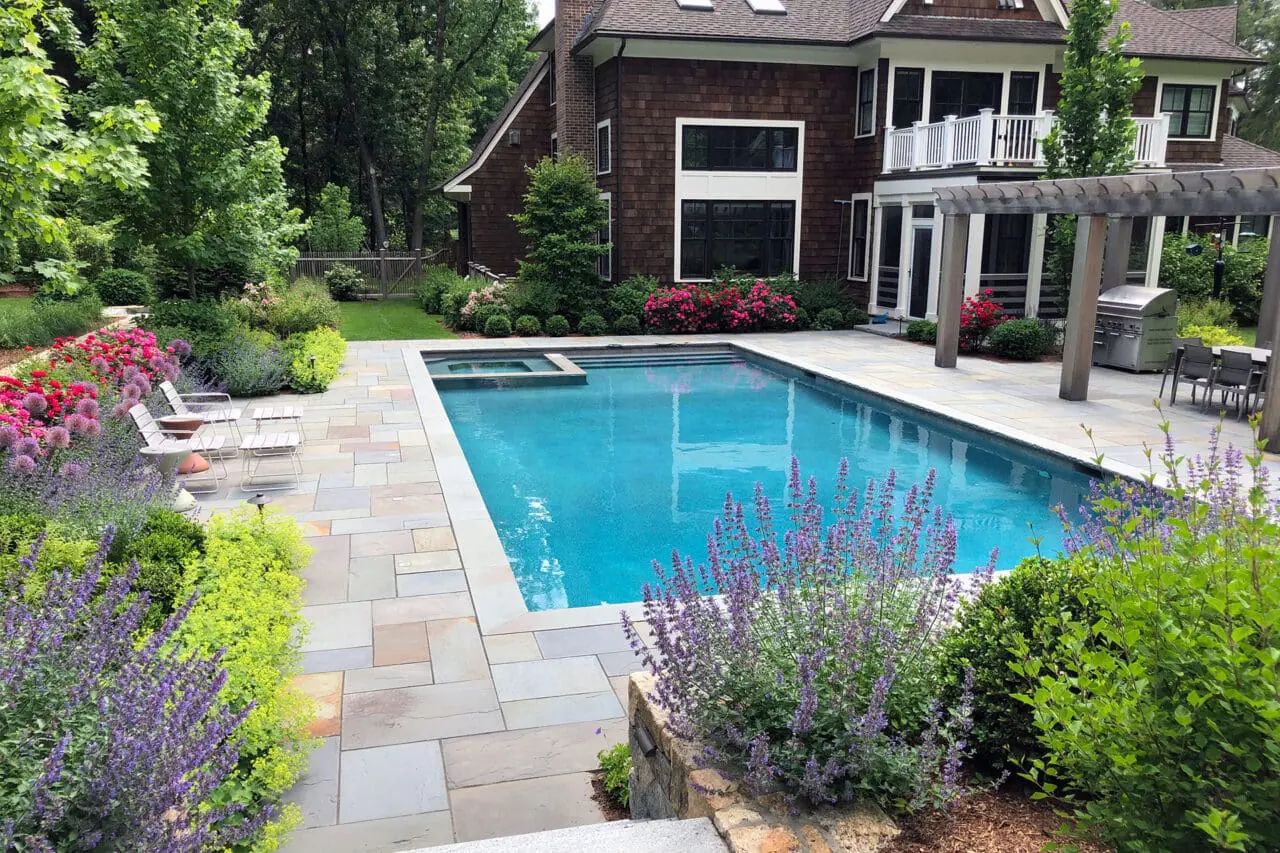
A patio was added without considering where water would go afterward. Shrubs were planted close together because they looked sparse at installation. A row of evergreens went in to solve a privacy problem, but now the property feels enclosed. A beautiful old tree was removed to make room for something new, and only afterward did everyone realize how much shade, scale, and character it had been providing.
New England landscapes can be particularly unforgiving of those decisions. We have wet springs, summer droughts, mature tree canopies, deer pressure, road salt, compacted soils, steep grades, and winters that repeatedly freeze and thaw.
Massachusetts has also become wetter. According to the NOAA State Climate Summary for Massachusetts, precipitation since 1970 has averaged about 4.7 inches more per year than during 1895–1969. That matters when we’re thinking about drainage, erosion, plant health, and the long-term performance of patios, walls, and other hardscape.
The good news is that most landscape problems become easier to understand once we stop looking at the symptom by itself. Here then, are nine mistakes we see regularly, and what we would think about instead.
1. Fixing the Visible Problem Without Asking What Caused It
A section of lawn is constantly thin, so it gets reseeded. A shrub dies, so another one goes into the same spot. Mulch washes onto the driveway after every major storm, so it gets raked back into the bed. The edge of a patio keeps settling, so the stones are reset.
Sometimes those are reasonable repairs. But if the same problem keeps returning, replacing what failed may only restart the cycle.
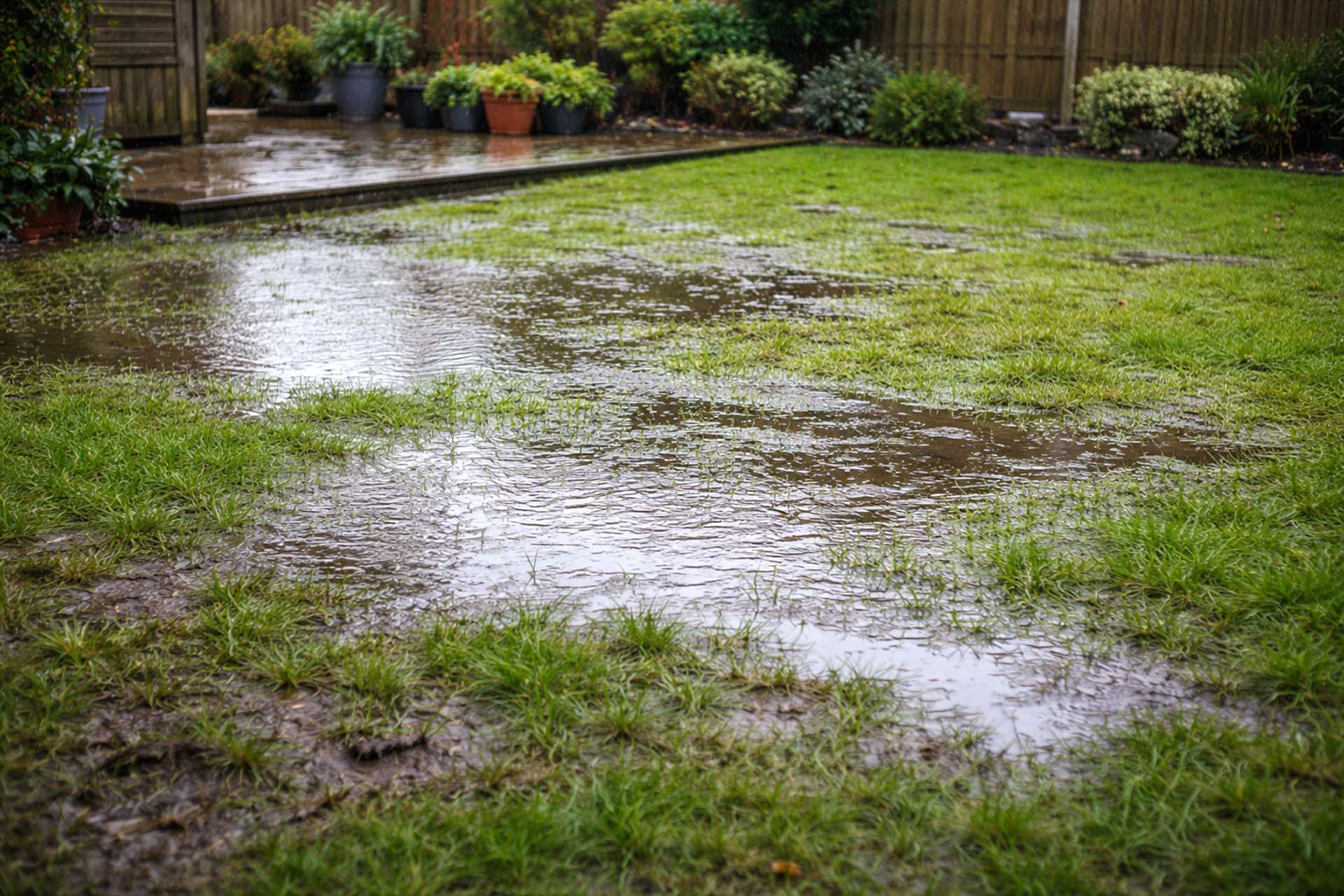
Water is one of the first things we look at. On established Greater Boston properties, drainage can be influenced by roof runoff, downspouts, driveway pitch, compacted soils, additions, retaining walls, neighboring grades, irrigation, mature tree roots, and changes made decades earlier.
The spot where water collects may not even be where the problem begins. A soggy lawn could be receiving runoff from uphill. A planting bed that continually fails may simply stay wetter than the plants can tolerate. A patio that moves each winter could have a drainage or base issue beneath the stone.
So before we replace something, we want to know why it failed in that particular location.
That doesn’t automatically mean installing a French drain or rebuilding the property’s drainage system. Sometimes the answer is surprisingly simple: redirecting a downspout, correcting a small grade, improving the soil, or choosing a plant that actually likes the conditions.
The important part is diagnosing the problem before prescribing the solution.
Learn More About Drainage Problems and Solutions
- Read Landscape Drainage Solutions for Massachusetts Properties for a closer look at standing water, runoff, grading, French drains, erosion, and other common drainage problems.
2. Choosing Plants for Their Size Today Instead of Their Size Five Years From Now
New landscapes can look surprisingly empty.
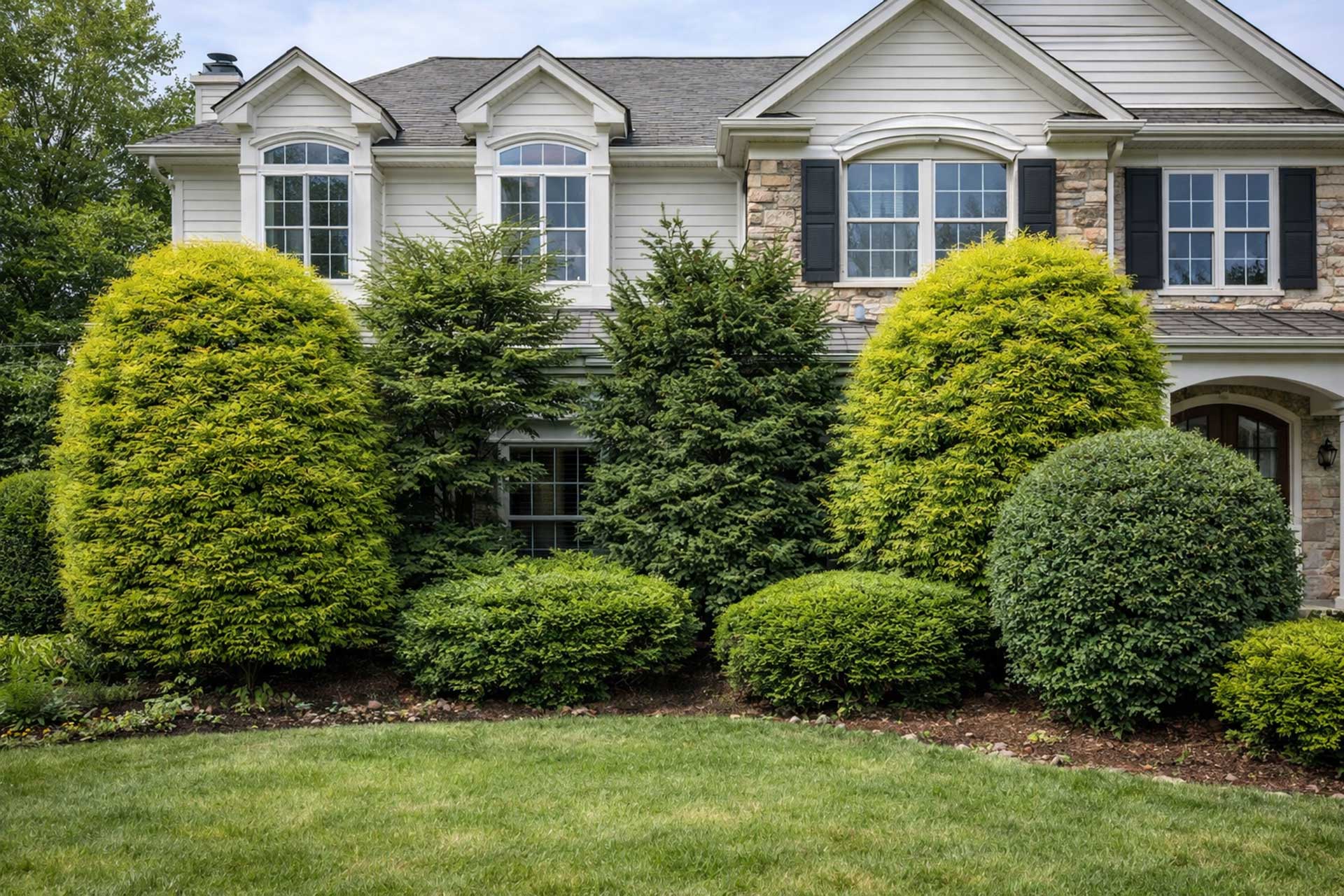
A three-gallon shrub seems tiny against a house. A newly planted evergreen hedge has visible gaps. Young hydrangeas can look lost in a large planting bed.
The instinct is often to add more plants or move everything closer together. Then they grow.
A few years later, shrubs cover windows, hydrangeas lean into walkways, evergreens compete with one another, and plants that should have graceful natural forms are being sheared several times a year simply to keep them within their allotted space.
At that point, what appears to be a maintenance problem is often really a spacing problem. We would rather choose a plant whose natural mature size fits the location than choose one that will need to be continually controlled.
That becomes especially important around foundations, walks, entries, patios, pools, and other places where the dimensions aren’t going to change as the plants grow.
Good planting design therefore has to think about two moments at once:
- How will the planting feel when it goes in?
- What will it become when the plants are mature?
A restrained young planting can take a little patience. But five years later, it often looks much better than a bed that was filled completely on installation day.
Learn More About Choosing the Right Plants
- Our guide to Foundation Landscaping for Boston Homes looks more closely at plant scale, mature size, and the relationship between planting and architecture.
- You can also see how dramatically mature sizes vary within a single group of plants in our Panicle Hydrangea Plant Profile.

3. Tackling One Outdoor Project at a Time Without a Larger Plan
There is nothing wrong with improving a landscape in phases. In fact, on larger properties, it can make a great deal of sense. The problem is making those improvements without knowing where the property is ultimately headed.
A homeowner may start with a patio. A few years later comes a pool. Then an outdoor kitchen, better privacy, landscape lighting, or a renovated driveway. Each project may be well designed individually, but one decision can make the next project considerably more difficult.
If nobody anticipated a future pool when the patio was installed, construction access may now run directly across finished stonework. If utilities for an outdoor kitchen weren’t considered, part of that patio may need to come back up. If grading was solved only around one project, the next improvement may change the drainage pattern again.
A landscape master plan doesn’t mean everything has to be installed at once. It simply means we understand how the major pieces relate before we commit to the first one.
Where could a future pool go? How would equipment reach it? Which utilities might eventually need to cross beneath hardscape? Which mature trees need protection? Where should drainage move? How should people circulate between the house, terrace, lawn, pool, garden, and driveway?
As Blade Senior Landscape Designer Joanna McCoy puts it:
“On larger properties, the master plan is often what keeps a project from becoming a collection of disconnected improvements. It gives every phase a reason.”
That is really the value of planning ahead. You can still work over several seasons or several years without repeatedly undoing yesterday’s investment.
Learn More Phased Planning
- Read The Landscape Master Plan: Why the Best Boston Properties Are Designed in Phases for a deeper look at sequencing larger landscape improvements.
- Our article on Circulation in Landscape Design also explains how paths, patios, entries, lawns, and outdoor rooms should connect before construction begins.
4. Treating Every Privacy Problem as a Row of Evergreens
We understand why this happens. You can see directly into the neighbor’s kitchen. A house behind yours sits higher on the grade. Cars are visible from the terrace. An outdoor dining area feels exposed.
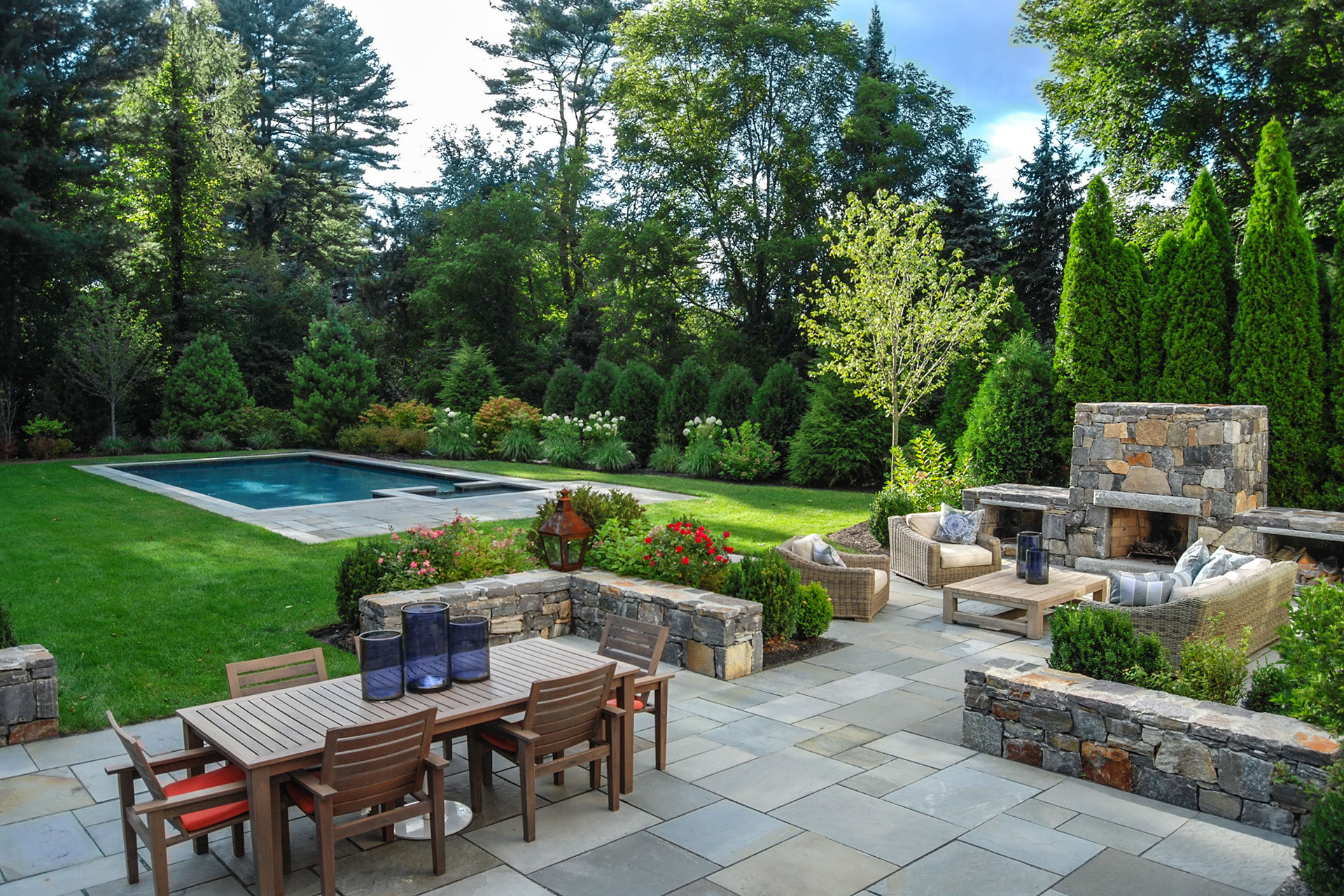
The obvious answer seems to be a hedge. Sometimes it is. But privacy is usually more nuanced than hiding the property behind a wall of arborvitae.
One of the first questions we ask is: What actually needs to be screened?
If the unwanted view is a second-story window, a six-foot hedge may do very little. If privacy is only needed around a terrace, screening the entire property line may be unnecessary. And if there is a beautiful mature tree, distant view, or open lawn beyond the boundary, a continuous evergreen wall can eliminate something worth preserving along with the thing we wanted to hide.
A good example is our Belmont Carriage House, where privacy had to be added without sacrificing sweeping views toward the Boston skyline.
Instead of closing the property off, the planting uses layers of hemlock, spruce, arborvitae, clipped yew, perennials, and strategically placed trees. The screening is substantial where it needs to be while important sightlines remain open. That is often the better way to think about privacy.
Depending on the property, we might combine:
- Evergreen structure
- Ornamental or understory trees
- Flowering shrubs
- Deciduous screening
- Lower evergreen masses
- Fences or garden structures
- Changes in grade
- Planting positioned specifically around outdoor rooms
A layered approach also gives us seasonal interest and reduces the risk of relying entirely on one species. Privacy should make a property feel more comfortable, not simply more enclosed.
Learn More About Designing for Privacy
- See Creating Privacy With Trees and Hedges in Residential Landscapes for more about layered screening, sightlines, and plant spacing.
- Our guide on Best Privacy Trees for Massachusetts highlights top privacy trees for Boston’s climate and explains how layered planting strategies help Greater Boston and MetroWest properties achieve lasting screening and structure.
5. Removing Mature Trees Before Understanding What They’re Already Doing
A mature tree can certainly complicate a landscape renovation.
Its roots may influence where a patio can go. Its canopy may produce more shade than a homeowner wants. It may interfere with a pool, driveway expansion, or an important view.
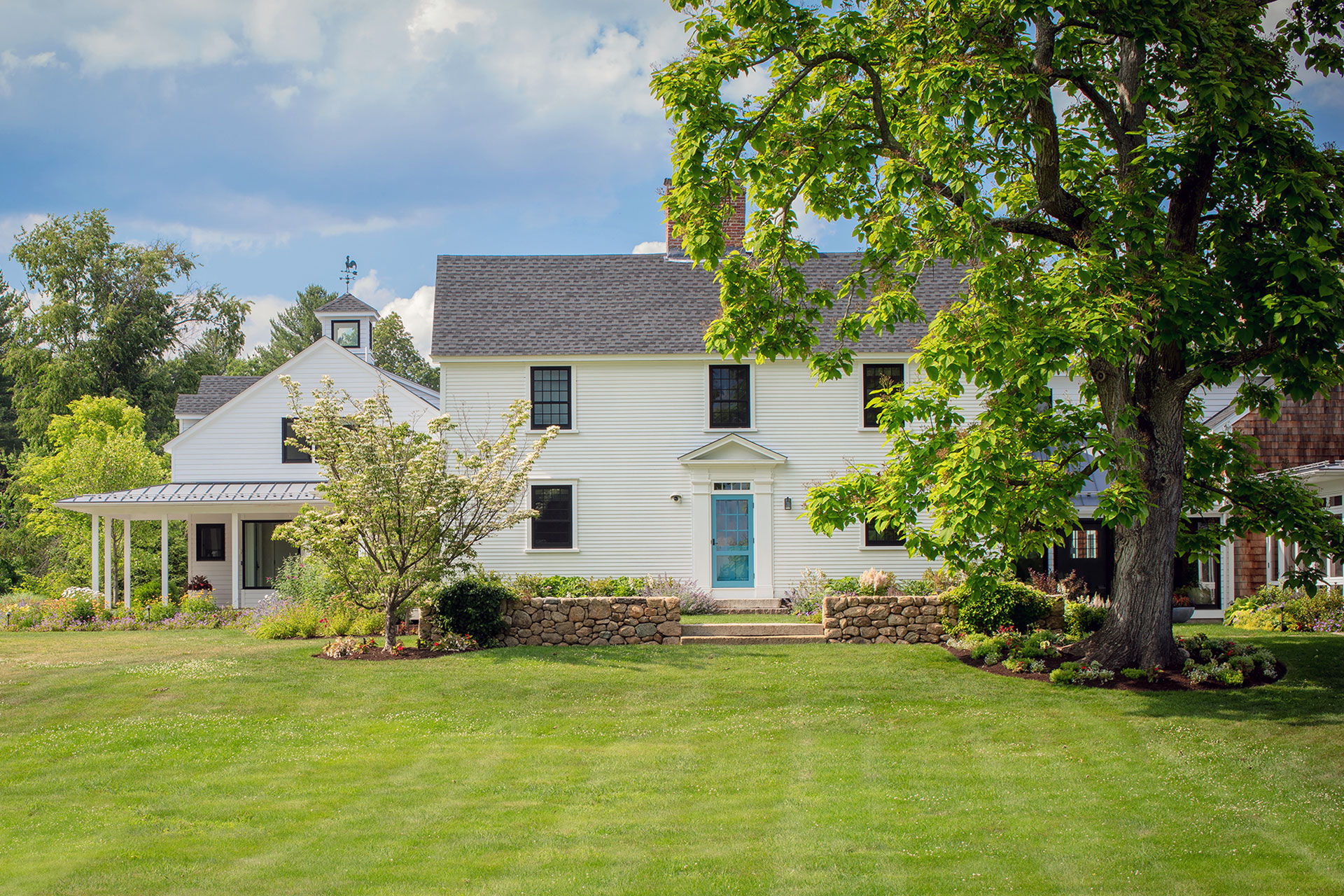
But before deciding it needs to come down, we want to understand the job it is already doing. On an established New England property, a mature oak, maple, beech, or pine may be providing:
- Summer shade
- Privacy from neighboring homes
- Scale around the architecture
- A backdrop for new planting
- Habitat and ecological value
- Framing for important views
- Much of the property’s established character
Some of those contributions are easy to overlook precisely because they have always been there.
Remove the tree and suddenly the neighbor’s house is much more visible. The terrace gets hotter. The home looks taller and more exposed. Everything newly planted around it feels smaller. You can plant another tree. You cannot replace the effect of a healthy 70-year-old oak in one season. That doesn’t mean every mature tree should stay.
Some are declining, structurally compromised, poorly positioned, or genuinely incompatible with what the property needs. Preserving a tree at any cost can be just as problematic as removing one too quickly.
The better approach is to evaluate important trees early, before the new design becomes fixed around them or against them.
Learn More About Designing Around Mature Trees
- Read our article Can Mature Trees Stay If We Redesign Our Property? for more about tree preservation, roots, grading, construction, and deciding which trees are worth designing around.
6. Assuming Every Part of the Property Has the Same Growing Conditions
One of the most misleading things we can say about a plant is that it is simply “good for Massachusetts.” Massachusetts is a large place, but even within one residential property the growing conditions can change considerably.
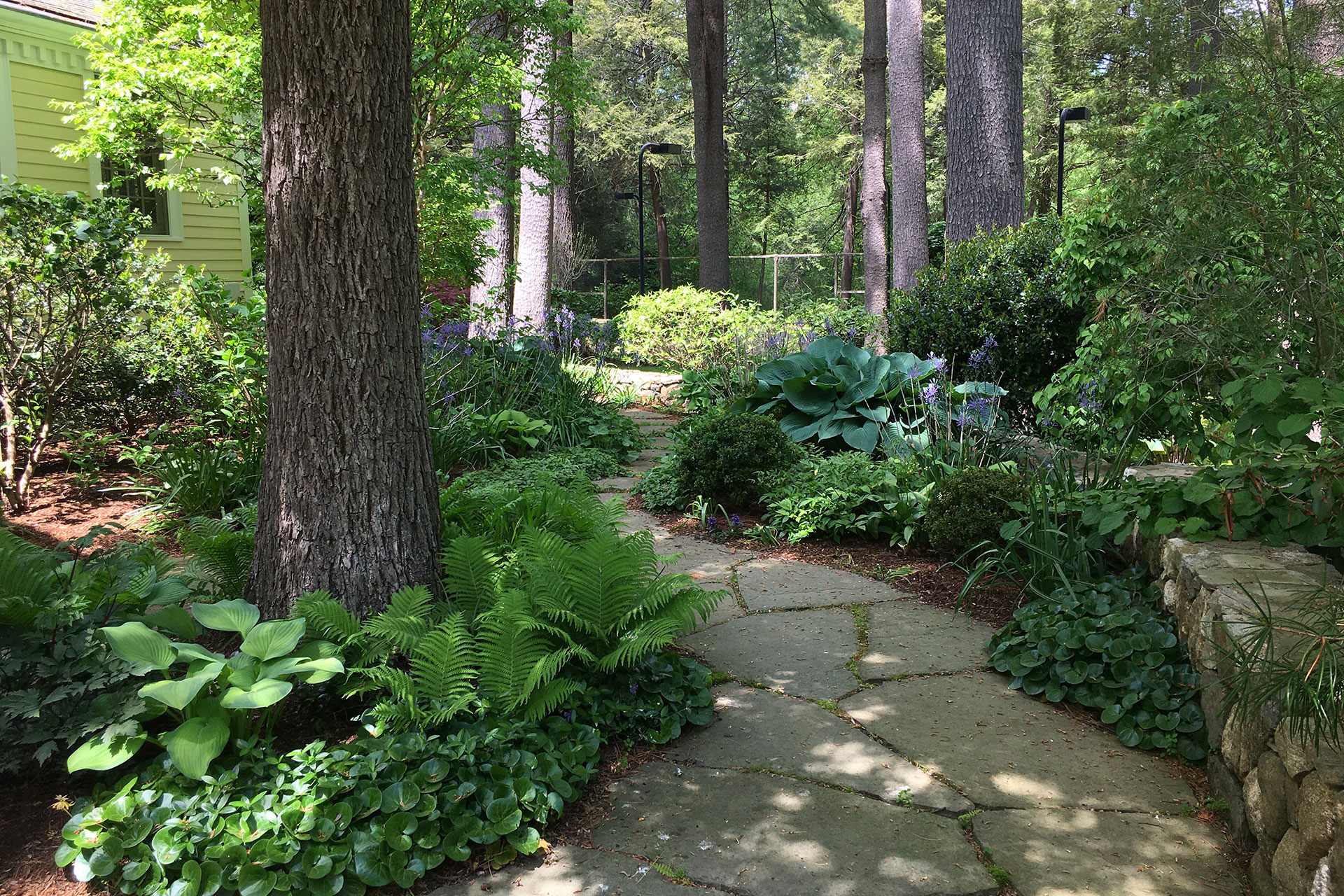
The planting along the driveway may get full afternoon sun, reflected heat, and winter salt. Fifty feet away, a bed beneath mature oaks may have deep shade and intense competition for soil moisture. One side of the house may stay damp for days after rain. Another may dry quickly in winter wind. A low point near the back property line may remain cool and moist long after the rest of the yard has dried.
These are microclimates, and established New England properties tend to have a lot of them.
Architecture, stone walls, pavement, tree canopies, grade, wind exposure, bodies of water, and even nearby buildings can change what a plant experiences. That’s why plant selection has to go beyond a hardiness-zone map.
We want to know:
- How many hours of direct sun actually reach the area?
- Is that morning sun or hot afternoon sun?
- How quickly does the soil drain?
- Do mature tree roots dominate the bed?
- Does snow get piled there?
- Is there road or driveway salt?
- Is it exposed to winter wind?
- How severe is deer browsing?
- Does irrigation reach the area effectively?
- Does masonry or pavement create additional heat?
This can explain why the same plant performs beautifully in the backyard and struggles at the front of the same house. It also explains why a broad plant list should be the beginning of a conversation, not the end of one.
The goal isn’t simply to find plants that survive in Massachusetts. It is to find plants that are comfortable in that particular part of your property.
Learn More About Growing Conditions
- Our Ask a Landscape Expert articles take this site-specific approach to plant selection, particularly on established properties with changing shade, moisture, and deer conditions.
- For areas under established tree canopy, see our guide to Native Ground Covers for Shade.
7. Asking Every Plant and Feature to Be the Star
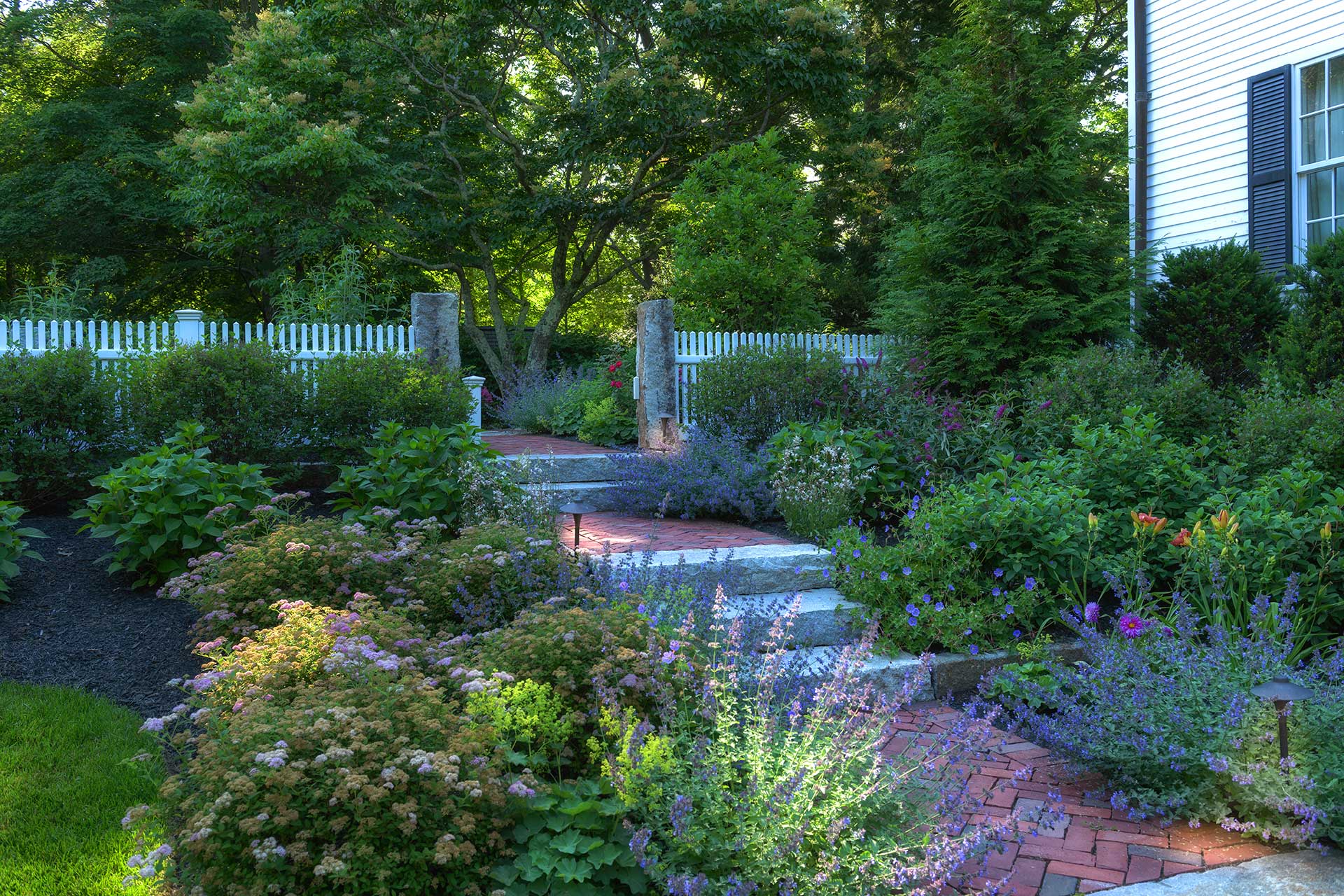
Sometimes a landscape contains plenty of beautiful things and still doesn’t feel especially good. There may be a specimen tree beside an ornamental grass beside a brightly flowering perennial beside another flowering shrub, with several different stone materials and decorative features competing for attention.
Nothing is necessarily wrong individually. Together, everything is speaking at the same volume.
Good landscape design needs quieter elements.
Evergreens provide a dark background. Repeated grasses can carry the eye through a long bed. Groundcovers create continuity at the lower level. A restrained paving palette allows the architecture and planting to remain dominant. This is one reason we often repeat plants rather than choosing a different favorite for every available space. Repetition creates rhythm.
As Blade Landscape Designer Richard Duhamel explains:
“Grouping plants in threes creates rhythm within a planting design. It gives the landscape structure while still allowing the composition to feel natural and relaxed.”
The Rule of 3 isn’t something we follow mechanically, but the larger lesson is important. A landscape needs hierarchy. Some plants provide structure. Some contribute texture or seasonal color. A smaller number become focal points. Not everything has to bloom at once. Not every corner needs an accent. And not every open space needs another different plant.
Often, a little restraint is what makes the most interesting parts of a garden more noticeable.
Learn More About Design Rules and Planting Strategy
- Read What Is the Rule of 3 in Landscaping? for more about repetition, grouping, visual rhythm, and planting composition.
- Our Inkberry Holly Plant Profile is also a useful example of a plant that often succeeds by providing quiet evergreen structure rather than demanding attention.
8. Designing for Summer and Forgetting About January
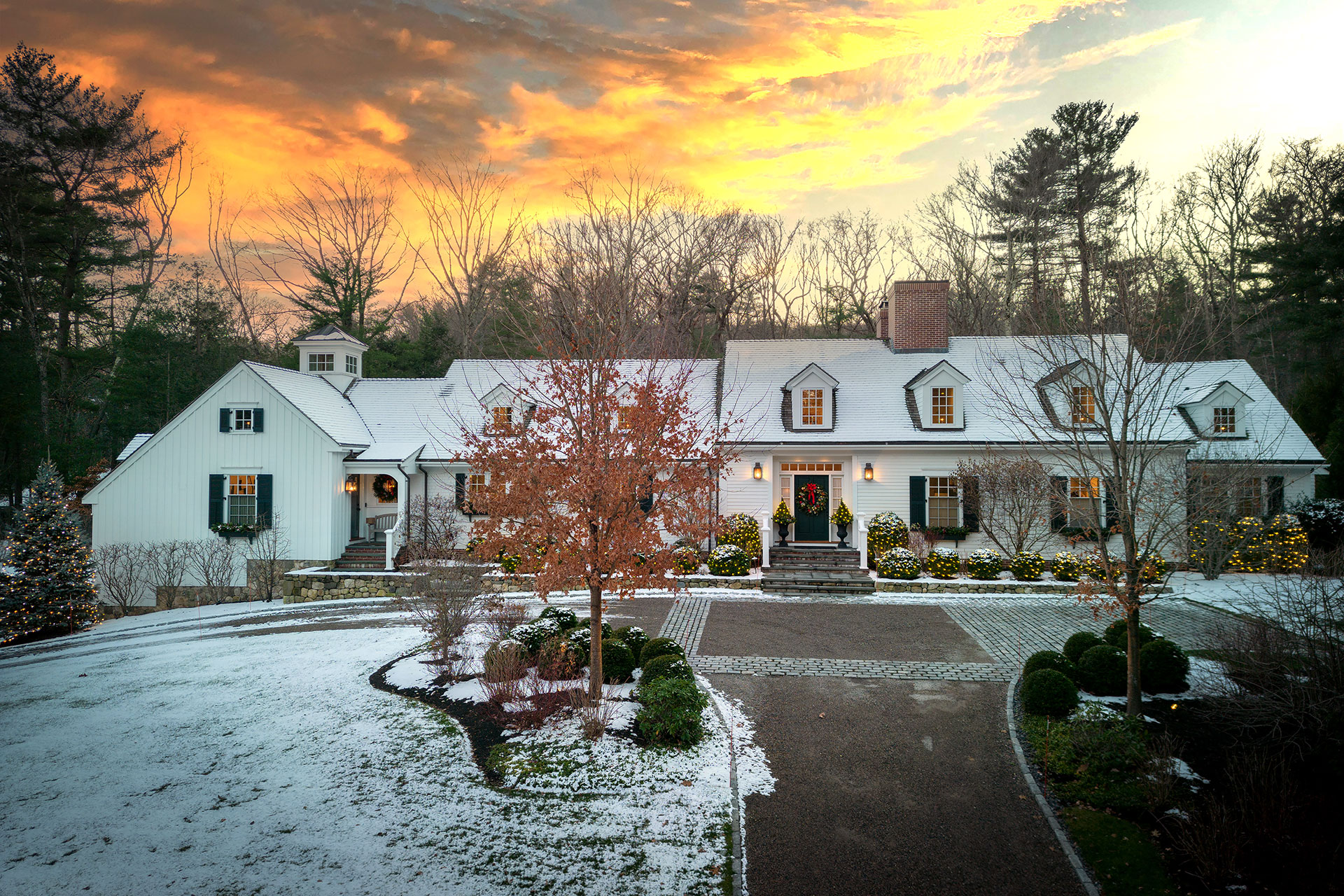
A landscape can look terrific in June and create problems six months later. This is one of the areas where designing in New England requires a different mindset.
We have to think about what happens when:
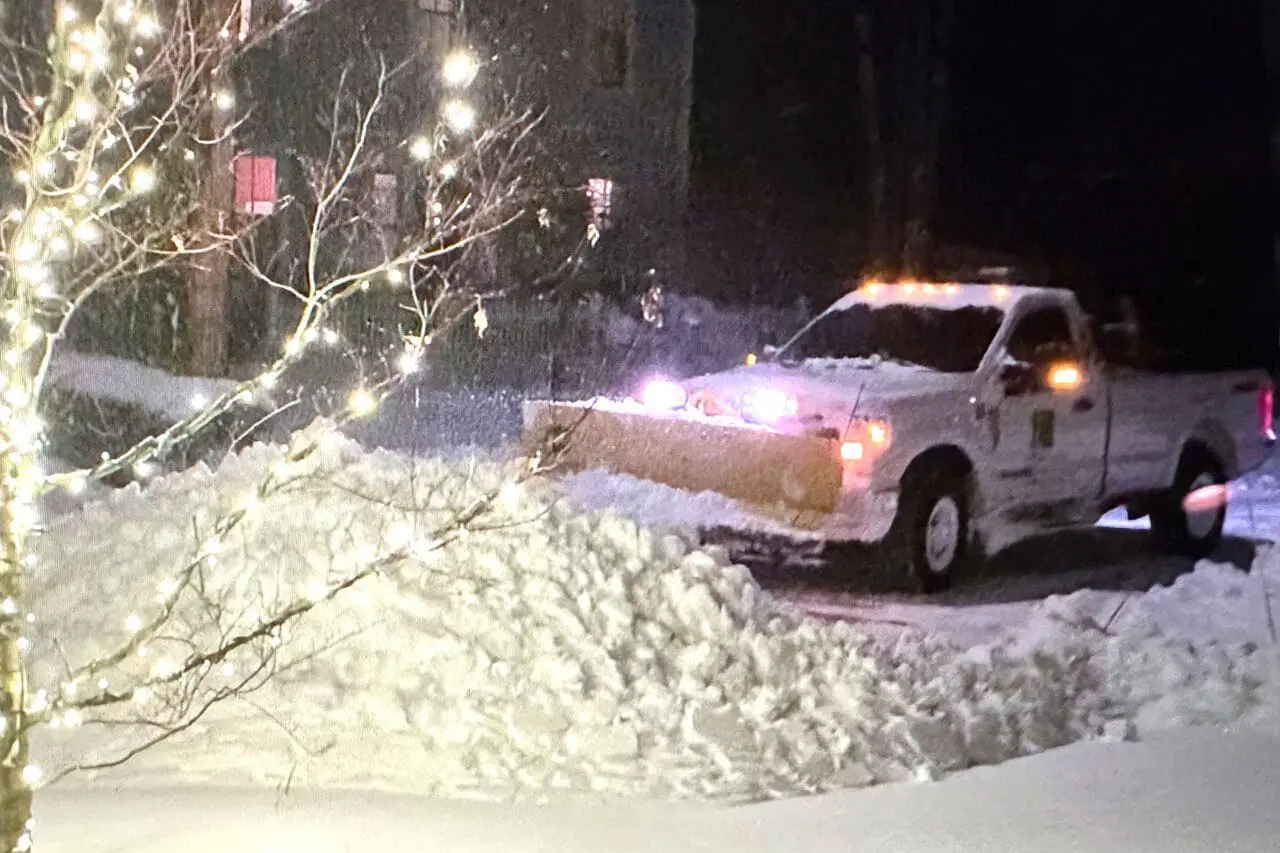
- Snow is pushed off the driveway
- Salt is applied to walks
- Soil freezes and thaws
- Evergreen foliage loses moisture in winter wind
- Snow and ice accumulate on shrubs
- Drainage paths freeze
- Plows need room to maneuver
- Deciduous privacy planting loses its leaves
Those conditions affect plants, hardscape, drainage, and how the property looks.
A planting bed beside a driveway may receive piles of salted snow every winter. A path with marginal drainage may become an icing problem. A shrub that fits beautifully beside the drive in summer may make snow removal unnecessarily difficult.
Hardscape has its own winter test.
Water moving into the wrong place can freeze, expand, and contribute to movement in patios, steps, walls, and walkways. Poor base preparation that seemed fine during the first summer often becomes much more apparent after repeated freeze-thaw cycles.
We also think visually about winter.
When the hydrangeas are bare, the perennials are dormant, and the lawn is covered with snow, what is holding the landscape together?
Evergreens, branching structure, stone walls, specimen trees, ornamental grasses, and thoughtful lighting become considerably more important. A successful New England landscape doesn’t simply survive winter. It should still make sense while winter is happening.
Learn More About Designing for New England Seasons
- If established evergreens are struggling after winter, read Why Are My Boxwoods Turning Brown?.
- Our guide to Arborvitae for New England Homes also covers winter exposure, deer pressure, spacing, irrigation, and other considerations that determine whether an evergreen screen performs well over time.
9. Designing a Landscape Without Considering How It Will Be Cared For
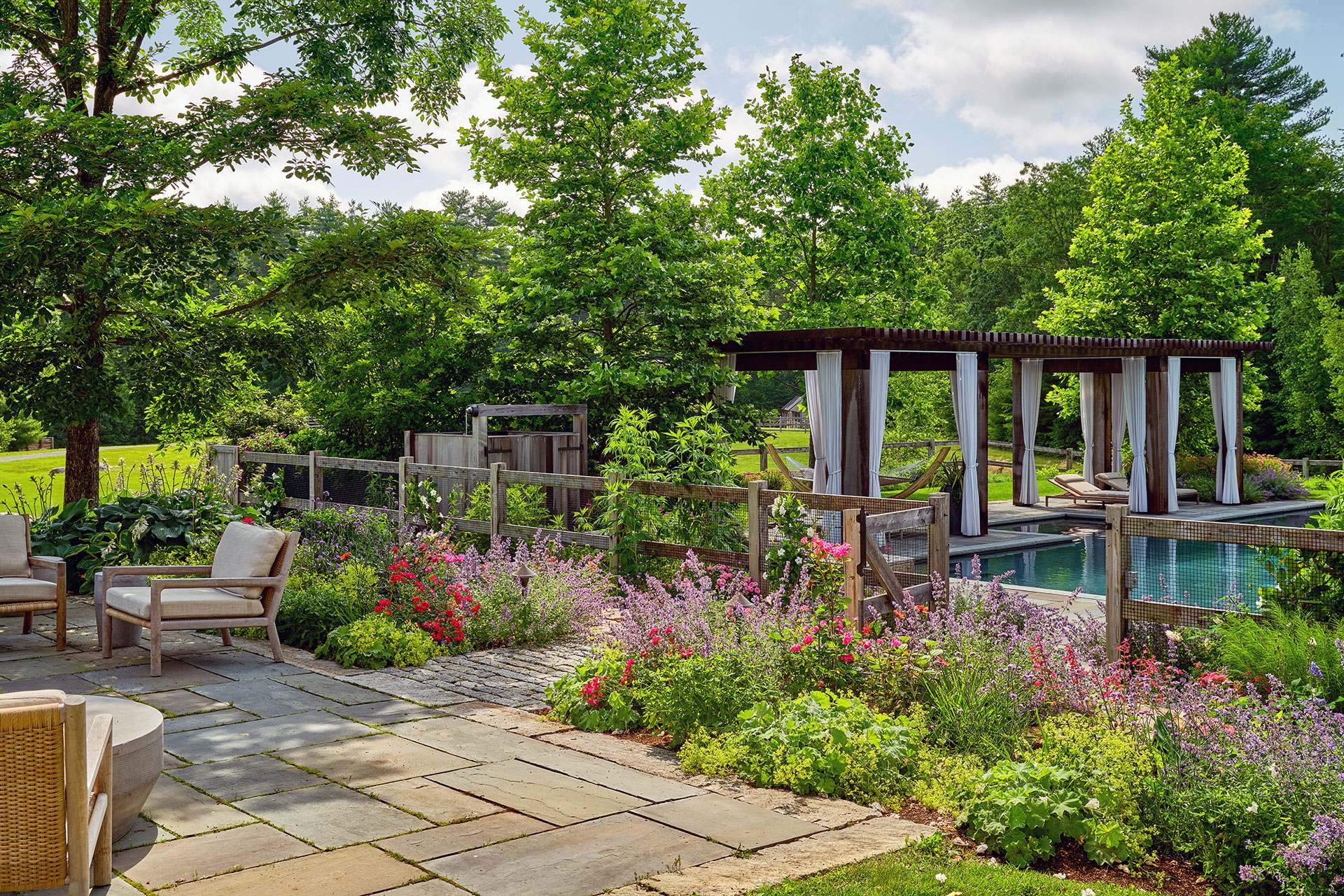
Maintenance shouldn’t be something we think about only after construction is finished. Many of the things that make a landscape unnecessarily difficult to maintain are decided during design. A shrub is placed in a space it will quickly outgrow. A narrow strip of lawn is created where mowing will always be awkward.
Plants with very different moisture requirements are grouped together. A garden bed is made so deep that reaching plants in the middle becomes difficult. Dense planting is installed beside a sitting area without considering airflow, pruning access, or how leaf litter will be managed.
None of those problems is really about whether someone is doing enough maintenance. They are consequences of design decisions. This is why the question isn’t simply, “Do you want a low-maintenance landscape?”
Nearly everyone says yes.
The better questions are more specific. How much pruning do you want? How much lawn? Are you comfortable dividing perennials periodically? Do you want seasonal containers? Will the property be professionally maintained? How should leaves be managed beneath mature trees? Where will snow be stored? How much irrigation will be necessary once plants are established?
A landscape is always changing. Trees cast more shade. Shrubs become larger. Perennials spread. Irrigation needs evolve. Good design anticipates enough of that change that maintenance can guide the landscape as it matures instead of continually correcting problems created on installation day.
Learn More Landscape Care and Maintenance
- Our guide to Low-Maintenance Landscape Design in Greater Boston looks at plant selection, mature size, irrigation, lawn, and long-term property care.
- You may also want to read What Does It Mean for a Landscape Company to Be Design/Build? for more about integrating design, construction, and long-term landscape performance.
The Best Fix Usually Starts With Looking at the Whole Property
Most of these mistakes begin with reasonable decisions.
Properties change. Trees mature. Families use outdoor spaces differently. Plants outgrow their original roles. Drainage issues become more noticeable. A landscape installed twenty years ago may simply no longer suit the house or the people living there.
The important thing is not to treat every symptom as an isolated problem.
If plants keep failing in one bed, understand the site before choosing another plant. If a patio needs replacement, look at its drainage, size, location, and connection to the rest of the property before rebuilding it. If privacy has become an issue, identify the actual views that need screening rather than automatically planting a hedge.
And before a larger renovation, spend some time deciding what is already working and worth keeping.
At a Blade of Grass, our designers, construction teams, horticulturists, and property care professionals work with established landscapes throughout Greater Boston, MetroWest, and Cape Cod. If parts of your property aren’t working as well as they should, or you’re considering a larger landscape redesign and aren’t sure where to begin, contact our team. We can help evaluate the property as a whole and determine which improvements make sense first.