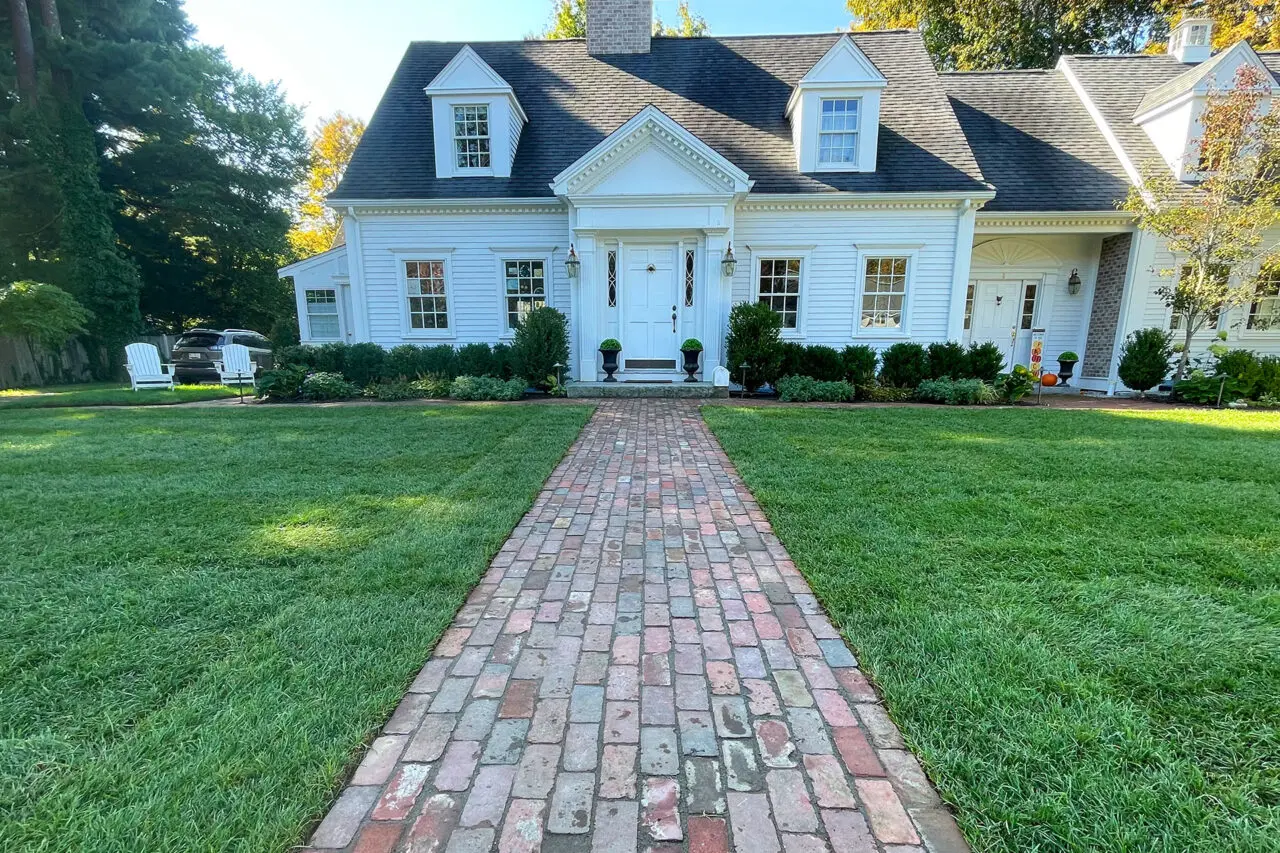
If you are thinking about hiring a landscape designer in Greater Boston or MetroWest, one of the first questions that usually comes up is cost. It is a fair question, but it is also one that is easy to answer badly.
Many articles reduce landscape design to a flat fee or a simple range. That may be convenient, but it often leaves homeowners with the wrong expectations. In this market, two properties with similar square footage can require very different levels of design work. A relatively clean suburban lot with modest planting updates is not the same as a sloped property that needs drainage correction, retaining walls, lighting, and town review.
In other words, landscape design cost is not just about the size of the yard. It is about what the property asks the design team to solve.
A landscape plan is not just a sketch of what could look beautiful. It is a working strategy for how the property should function, drain, be built, and mature.”
– Katie Johnson, Design Associate, a Blade of Grass
For Boston-area homeowners, that matters. New England properties often bring old stone walls, grade changes, mature trees, runoff issues, constrained urban footprints, historic context, and municipal permitting requirements. A well-prepared design accounts for those realities early, before they become expensive surprises during construction.
Key Takeaways
- Landscape design cost in Boston depends more on complexity than on yard size alone.
- Site conditions such as slope, drainage, access, and existing structures can significantly expand the design scope.
- Hardscape, planting design, lighting, irrigation, and permitting each add layers of coordination.
- Phased projects are common and can be a smart way to approach larger properties.
- A strong design process helps reduce downstream construction changes, delays, and maintenance issues.
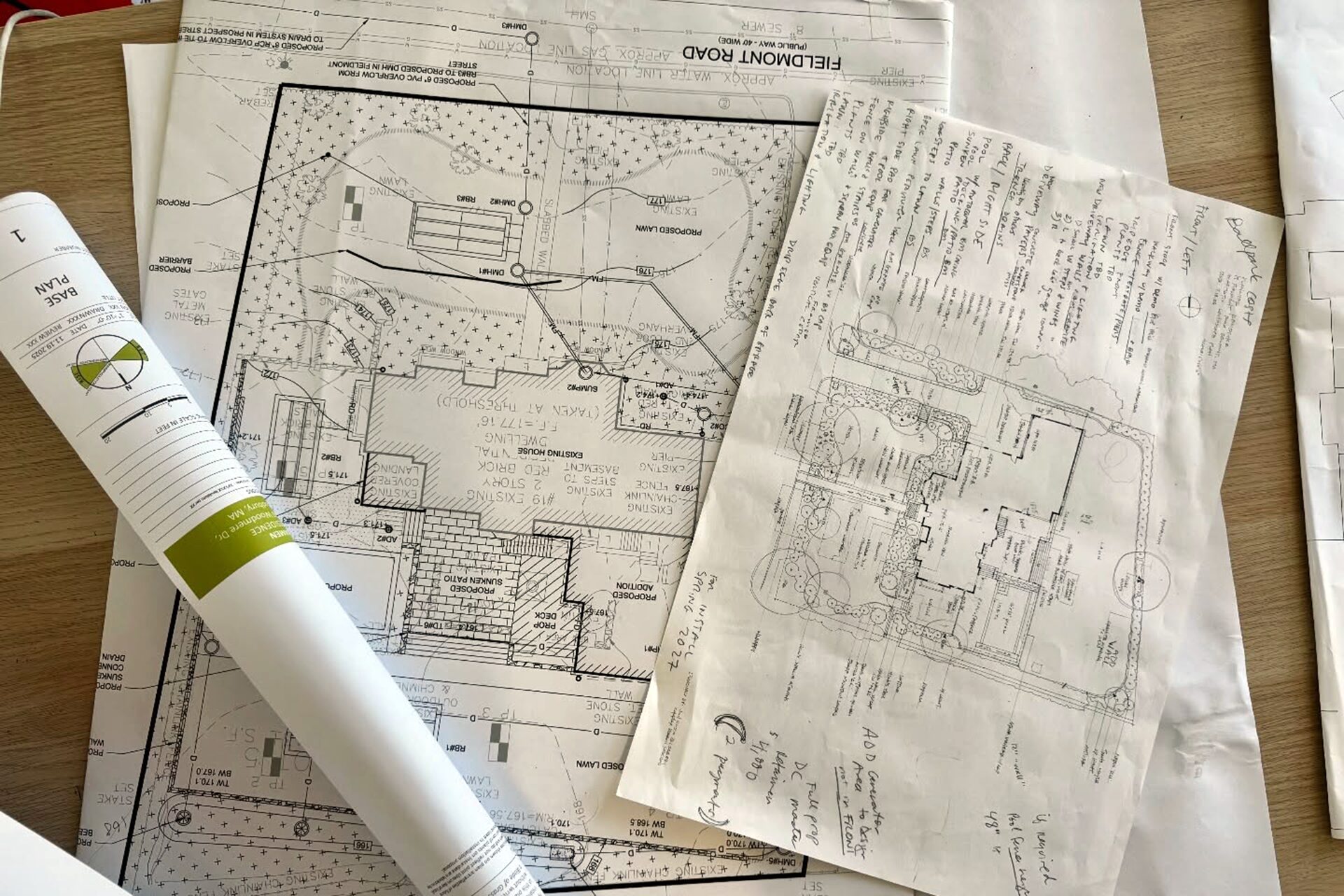
Why the Cost of Landscape Design Varies So Much
Homeowners often ask for a number before the scope is fully understood. That is understandable, but it is also where confusion starts. A design fee reflects the amount of thinking, measuring, coordination, and problem-solving required before construction begins. In Boston-area residential work, that may include:
|
|
That is why a “design price” can vary widely from one property to another. The question is not simply, “How much does a plan cost?” The better question is, “How much design work does this property require?”
When comparing fees from different firms, check whether they cover the same level of site assessment, drawings, revisions, and coordination. Our guide to what to look for in a landscape proposal can help you understand those differences before deciding.
Related Blog: Transform Your Property: The Real Numbers Behind Landscaping ROI
Property Size Matters, but It Is Not the Main Story
Large Properties Usually Mean More Systems, More Decisions, and More Coordination
A larger property often costs more to design because there is more ground to consider and more opportunities for the design to become layered and detailed. That might include a front arrival sequence, side-yard circulation, privacy screening, terraces, pool areas, kitchen gardens, woodland edges, lighting, irrigation zones, and long-term maintenance planning. But size alone does not determine effort.
Smaller Properties Can Still Be Highly Complex
Some of the most demanding design projects happen on compact urban or close-in suburban lots. Tight access, grade changes, drainage constraints, limited staging areas, and the need to make every square foot work can make a smaller site more intricate than a larger one.
A Beacon Hill courtyard, a Brookline backyard, and a sloped Weston property may all require different types of design intelligence, even if their footprints are very different.
The Biggest Cost Drivers in Landscape Design
1) Site Conditions
Existing Grade and Topography
Flat, open sites are generally easier to study and plan than properties with steep slopes, abrupt elevation changes, or awkward transitions between the house and the yard. If a design has to resolve a steep drop from a porch to a lawn, create usable terraces, or stabilize a hillside, the design process becomes more technical. It may require closer coordination around steps, walls, drainage, and circulation.
Drainage and Stormwater Behavior
Drainage is one of the most important and most underestimated factors in landscape design cost. When water moves poorly across a property, the design has to do more than arrange beautiful spaces. It has to correct grading, redirect runoff, protect structures, preserve planting health, and sometimes accommodate local stormwater requirements. The EPA notes that runoff from rain and snowmelt flows over impervious surfaces instead of soaking into the ground, which is exactly why paved areas, roofs, and compacted soils can complicate residential site planning. In many Boston-area projects, drainage is not a side issue. It is central to the plan.
Existing Trees, Roots, Ledge, and Soil Conditions
Mature trees can be a major asset, but they also shape what is possible. Root zones affect grading, excavation, utility routing, and hardscape placement. Rocky soil or ledge can alter wall design, drainage strategy, and installation methods. Wet soils or compacted fill can change planting and stormwater decisions. All of that can increase the design effort before a shovel ever hits the ground.
2) Scope of Work
Hardscape Raises the Level of Technical Planning
The more hardscape involved, the more design coordination is typically required. Patios, terraces, steps, walls, walkways, driveways, pool surrounds, and outdoor kitchens all involve dimensions, materials, drainage, transitions, and construction detailing. This is one area where broad web pricing guides can mislead homeowners. Some competitor articles simplify hardscape into generic per-square-foot figures, but Boston-area projects often depend heavily on access, grade, base preparation, edging, drainage, and the material standard expected by the homeowner.
Planting Design Can Range From Simple to Highly Detailed
Planting may sound straightforward, but the design effort can vary dramatically. A basic foundation refresh is one thing. A full planting plan for privacy, seasonal performance, screening, specimen trees, understory layers, and four-season composition is another. In affluent Greater Boston landscapes, planting plans are often expected to do more than “fill beds.” They are meant to shape views, soften architecture, frame circulation, create enclosure, and still look composed across spring, summer, fall, and winter.
Landscape Lighting Adds Another Layer
Lighting design is often treated as an add-on, but it meaningfully expands the design scope when it is integrated well. Path lighting, step lighting, uplighting, downlighting, façade emphasis, and nighttime usability all require thoughtful planning. That is especially true when the goal is subtlety rather than over-illumination.
Irrigation and Supporting Systems Also Affect Design
Design does not happen in isolation from the systems that support the landscape. Irrigation zoning, drainage infrastructure, sleeves, low-voltage routing, and service access can all affect layout decisions. A well-developed plan anticipates those systems instead of forcing them in later.
3) Permitting and Local Review Can Change the Scope
Boston-area homeowners are often surprised by how much local regulation can shape outdoor projects. Depending on the property and municipality, the design may need to account for zoning, setbacks, retaining walls, drainage changes, conservation issues, tree rules, historic districts, or land disturbance thresholds. Your own permitting guide is right to emphasize that walls, drainage changes, and other site work can trigger local review in Boston-area towns.
In Framingham, for example, land disturbance and stormwater rules explicitly state that projects cannot simply be segmented to avoid compliance, and that all phases may be considered part of a single development project. That does not mean every residential design becomes a permit-heavy process. It does mean that permitting risk should be understood early, because once town review enters the picture, the design scope often expands.
Related Blog: How to Hire a Professional Landscape Designer in Boston
Phased Projects: A Smart Strategy, Not a Compromise
Many homeowners assume phasing means scaling back a vision. In practice, phasing is often a disciplined way to approach a complex property. A phased plan can help homeowners:
- prioritize drainage and grading first
- solve circulation and foundational hardscape before decorative layers
- spread investment over time
- coordinate improvements around family schedules or future additions
- protect the long-term design vision while avoiding piecemeal decisions
A strong phased design is still a complete design. It simply organizes implementation intelligently.
“Phasing works best when the master plan is clear. That way, each stage feels finished on its own and still fits the bigger picture.”
– Joanna McCoy, Senior Landscape Designer, a Blade of Grass
For homeowners who want to improve the property over several seasons or years, a landscape master plan can clarify which investments should happen first, which can wait, and how each phase should support the next.
Why Boston and MetroWest Projects Often Cost More to Design
Landscape design in Greater Boston and MetroWest often involves more complexity than homeowners expect at the outset. A property may look straightforward on first walk-through, but once grading, drainage, access, materials, permitting, and long-term performance are considered, the design scope can expand quickly. That is one reason broad online pricing advice often falls short in this market. The design work here is not just about appearance. It is about resolving site conditions thoughtfully and planning for how the landscape will function over time.
Climate and Durability Expectations
New England landscapes have to perform through freeze-thaw cycles, snow storage, spring runoff, humid summers, and the general wear that comes with four true seasons. That affects far more than plant selection. It also influences how patios are built, how steps and walls are detailed, how drainage is handled, and where materials are likely to succeed or fail over time. In this region, good design is expected to hold up under real seasonal stress, not simply look polished in the first season after installation.
Older Properties and Inherited Conditions
Many Boston-area homes come with existing site issues that are not fully visible until the design process begins. A property may have outdated masonry, awkward grade transitions, partial drainage fixes, overgrown planting beds, or earlier improvements that were added without a cohesive long-term plan. In those cases, the design work often starts with diagnosis before it moves into vision. Untangling inherited conditions takes time, but it is often what allows the final result to feel clean, intentional, and well resolved.
High Expectations for Finish and Cohesion
Homeowners investing in this level of landscape work are usually looking for more than a simple visual upgrade. They want the property to feel architecturally appropriate, carefully composed, and aligned with how they live, entertain, and move through the site. That means the design has to do more than fit features into the yard. It needs to create relationships between the house, the land, the materials, the planting, and the daily experience of the outdoor space. That level of refinement naturally requires more thought, more coordination, and a higher degree of design detail.
Related Blog: Why Is Landscape Design So Expensive in Boston?
Why Good Design Is Still Worth Paying For
This is where design can be misunderstood. Some homeowners look at design as a preliminary expense to get through before “the real project” starts. In reality, good design protects the investment that follows. It helps reveal constraints early, organize priorities, align budgets with the property, and reduce mid-project changes.
That matters because remodeling and renovation decisions are rarely only about resale. According to the 2025 NAR Remodeling Impact Report, 28% of homeowners said the most important result of remodeling was better functionality and livability, while 23% pointed first to beauty and aesthetics. The same report also found that 64% had a greater desire to be at home after remodeling.
For landscape projects, that is the point. The goal is not simply to spend less on the design phase. It is to make better decisions about what the property should become.
Related Blog: What Should a Landscape Warranty Cover? A Boston Homeowner’s Guide
How Homeowners Can Budget More Wisely Before Hiring a Designer
Start With Priorities, Not Pinterest Volume
Inspiration is helpful, but it is not the same as a plan. Many homeowners begin with a large collection of saved images, materials, and ideas, but the more useful starting point is understanding what the property actually needs to do better. Is the main problem poor drainage near the house? A lack of privacy from neighboring properties? An underused patio area? An entry sequence that feels flat or disconnected from the architecture? A clear set of priorities helps the design process focus on the issues that will have the greatest impact on how the property looks, functions, and feels.
That does not mean you need all the answers before contacting a designer. It simply means that the process becomes more productive when inspiration is paired with goals. A designer can then evaluate which ideas fit the site, which need to be adapted, and which may not make sense for the property, budget, or long-term maintenance needs. Homeowners who start with priorities rather than a long wish list are often better positioned to make decisions that feel cohesive rather than pieced together.
Be Honest About Timeline and Phasing
Not every landscape project needs to be completed all at once, and for many properties, that is not even the best approach. If you already know that the work will likely happen over multiple seasons or in planned stages, it is worth saying that early. A thoughtful design process can account for phasing in a way that protects the long-term vision instead of treating each phase like a separate project.
This is especially important on larger or more complex properties, where drainage, grading, access, hardscape, planting, and lighting may need to happen in a logical sequence. For example, it often makes sense to address site structure and infrastructure first, then move into planting and finishing layers later. When phasing is discussed upfront, the designer can organize the work in a way that avoids rework, preserves continuity, and allows each completed stage to feel intentional. That usually leads to better budgeting and fewer compromises later.
Expect the First Conversation to Be About Complexity
Some homeowners expect the initial discussion to center on style preferences and rough numbers, but a good designer will usually begin somewhere more fundamental: the property itself. Questions about slope, runoff, drainage patterns, existing trees, access for construction, changes in grade, desired amenities, and possible permitting are not side topics. They are the factors that shape the real scope of the design.
This is one reason why two properties with similar square footage can require very different levels of design work. A relatively straightforward site may allow the design team to move quickly into layout and material direction. A more challenging property may require much more analysis before meaningful planning can happen. When a designer asks detailed questions early, that is usually a sign of seriousness, not complication for its own sake. It shows they are trying to understand what will affect both the design process and the overall investment.
Understand That Design and Construction Are Related, but Not Interchangeable
It is easy to think of design as a preliminary step that should be kept as inexpensive as possible, but that view can be shortsighted. Design and construction are closely connected, yet they serve different purposes. Design is where site problems are uncovered, priorities are organized, circulation is improved, materials are considered, and the overall direction of the project is shaped. Construction is where that work is executed. One does not replace the other.
A lower design fee can sometimes reflect a simpler process, less site analysis, fewer revisions, less coordination, or less detailed planning. In some cases that may be appropriate. In others, it can lead to ambiguity, missed issues, and costly changes once construction begins. The goal is not to pay more for the sake of paying more. The goal is to make sure the design work is robust enough to guide smart decisions. For homeowners making a meaningful investment in their property, a well-developed landscape design often saves money, time, and frustration by reducing uncertainty before the build phase begins.
Related Blog: Landscape Designer vs Landscape Architect: Which One Does Your Property Need?
Frequently Asked Questions
Q: How much does landscape design cost in Boston?
A: There is no reliable flat answer that fits every property. Design cost depends on site complexity, scope, level of detail, permitting needs, and whether the project includes elements such as hardscape, planting, lighting, drainage, and phased planning.
Q: Is landscape design usually charged separately from construction?
A: Often, yes. Design is its own professional service, even when the same firm also handles construction. The design phase defines the vision, solves site issues, and prepares the project to be priced and built more intelligently.
Q: Does a larger yard always mean a higher design fee?
A: Not always. A larger property often requires more design work, but a smaller site with grading issues, drainage constraints, difficult access, or complex outdoor living elements can be just as demanding.
Q: Do drainage and grading issues really affect design cost that much?
A: Yes. They often change layout decisions, material choices, elevations, and permitting considerations. In some cases, they are the main reason a project requires more technical planning.
Q: Is phasing a sign that the project is too expensive?
A: No. Phasing is often a smart planning strategy. It allows homeowners to address the most important site issues first while keeping the long-term design coherent.
Why the Right Process Matters
A thoughtful landscape does not begin with a generic number. It begins with understanding the property, the constraints, and the opportunities that make the project unique.
At a Blade of Grass, our integrated approach brings landscape design, construction, and long-term maintenance into one coordinated process. That means the ideas developed during design are informed by real site conditions, practical execution, and how the landscape will perform over time. For homeowners in Greater Boston and MetroWest, that leads to outdoor spaces that feel more cohesive, more usable, and better aligned with the home itself.
If you are starting to think seriously about your property, contact us to begin the conversation. We would be glad to help you understand what your site is asking for, what may be driving complexity, and what a well-planned path forward could look like.