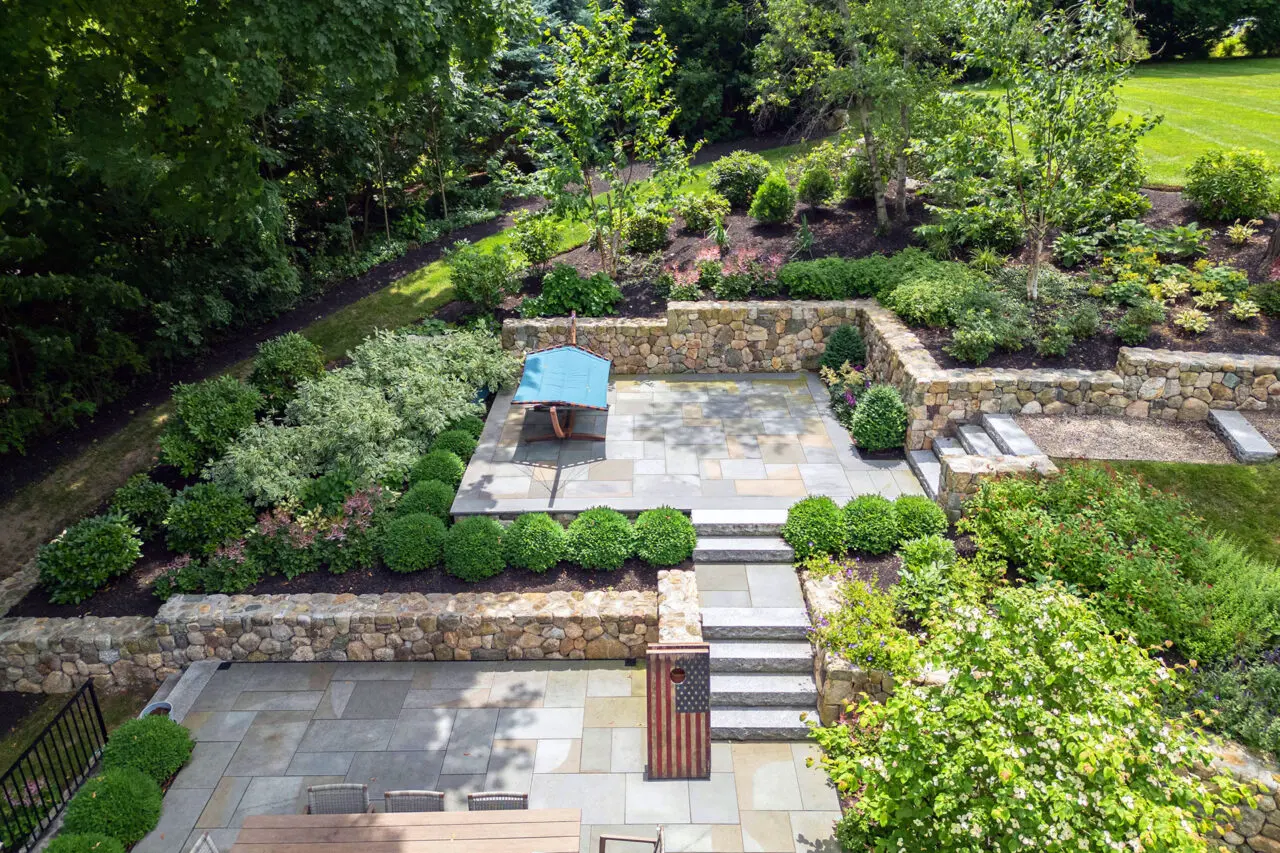
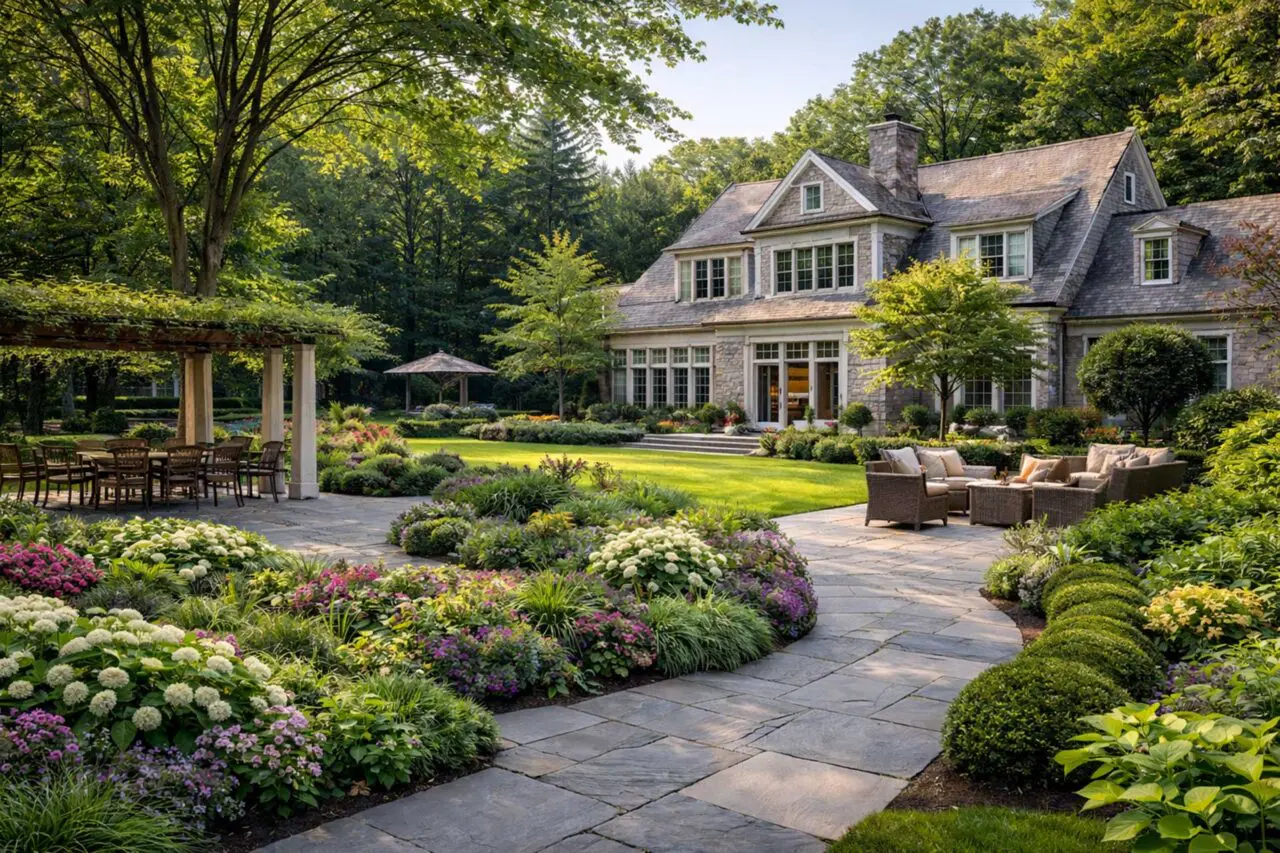
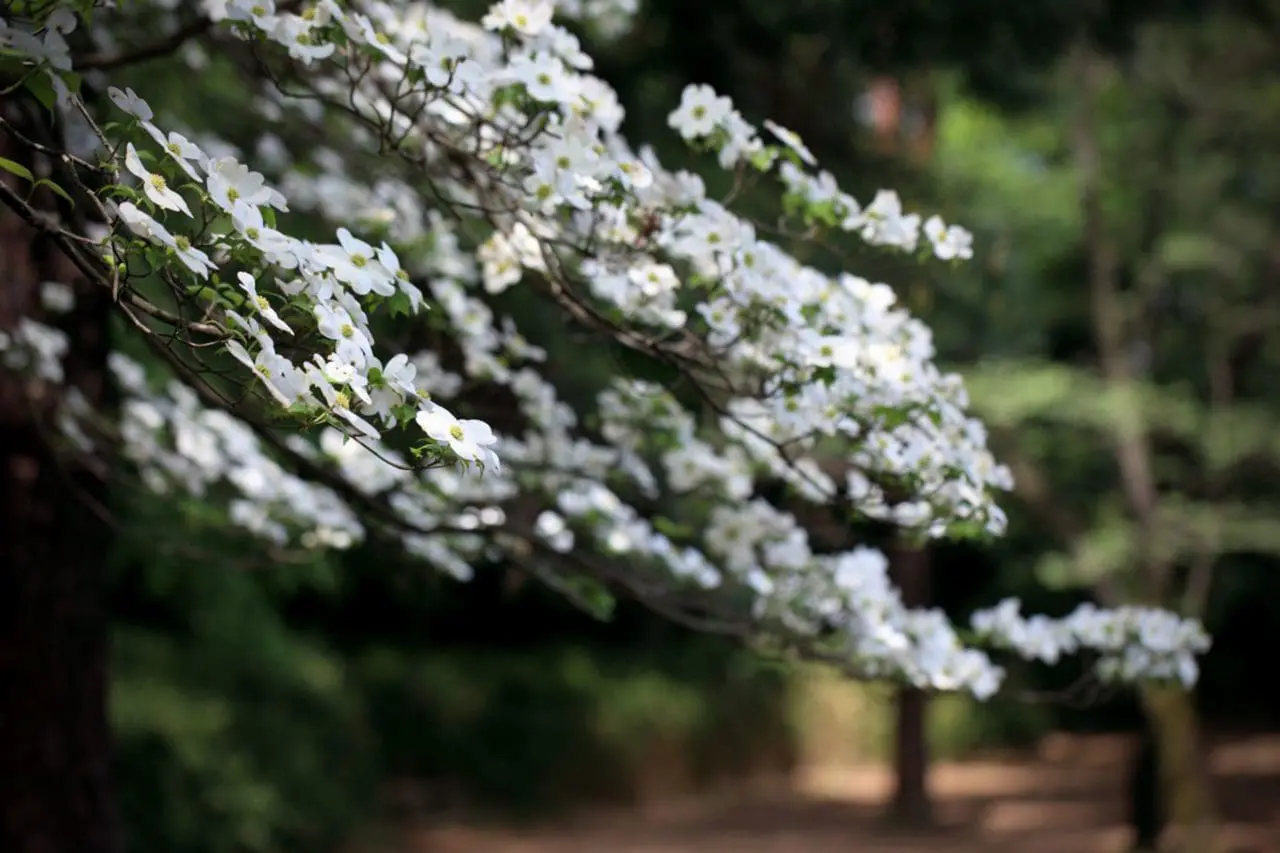
A smaller outdoor space can still carry a lot of value. In many Boston-area homes, the most meaningful landscape design opportunities are not found on sprawling lawns or wide-open properties. They are tucked behind townhomes, framed by fences, carved into side yards, layered around patios, or placed between the home and a neighboring property.
For homeowners in Boston, Brookline, Cambridge, Newton, Belmont, Charlestown, Beacon Hill, the South End, and nearby communities, compact outdoor spaces often require a more careful design approach than larger landscapes. Every square foot has to earn its place. Circulation, privacy, planting, drainage, lighting, materials, and maintenance all need to work together.
That is where thoughtful landscape design can make a measurable difference. A small backyard, courtyard, terrace, or patio does not need to feel constrained. With the right plan, it can become a private dining space, a quiet garden room, a refined entertaining area, or a low-maintenance extension of the home.
The National Association of Realtors’ 2023 Remodeling Impact Report: Outdoor Features found that outdoor improvements consistently deliver high homeowner satisfaction. Related coverage from the National Association of Landscape Professionals noted that all 11 outdoor projects in the report earned Joy Scores of 9 or above, with landscape lighting scoring 10 and a new patio scoring 9.9.
For compact Boston-area properties, the opportunity is not simply to make a small space look better. It is to make it work harder, feel calmer, and age more gracefully.
Key Takeaways
- Small outdoor space design requires careful planning because every design decision has a larger visual and functional impact.
- Compact Boston yards, courtyards, patios, and side yards often need solutions for privacy, shade, narrow access, drainage, circulation, and year-round maintenance.
- Hardscape, planting, lighting, irrigation, and grading should be planned together rather than handled as separate upgrades.
- Layered planting, built-in seating, thoughtful paving, and subtle lighting can make a small space feel larger and more usable.
- The best compact landscapes balance beauty, durability, and long-term residential landscape maintenance.
Why Small Outdoor Spaces Need More Design Discipline
A large property can sometimes absorb a few imperfect decisions. A compact outdoor space rarely can. If the patio is slightly too large, planting beds may feel thin. If the walkway is awkward, circulation becomes frustrating. If screening plants are placed too close together, the garden can quickly feel crowded. If drainage is not addressed, a beautiful courtyard can become damp, stained, or difficult to maintain.
In small outdoor space design, restraint matters. The goal is not to fill every corner. The goal is to create a clear, comfortable, and well-proportioned outdoor room.
A compact landscape often needs to answer several questions at once:
- Where will people sit, dine, or gather?
- How will guests move through the space?
- What views should be framed or screened?
- Where does water go during heavy rain?
- How will the space look in winter?
- How much maintenance will the homeowner realistically want?
“In a compact property, there is no leftover space. The patio, planting, lighting, and circulation all need to be designed as one composition.”
– Dan Gersh, Account Manager, a Blade of Grass
That integrated approach is especially important in Greater Boston, where older homes, tight lot lines, mature trees, uneven grades, and neighborhood density often shape what is possible.
Related Blog: The Most Popular Landscape Design Projects for Boston-Area Homes
Common Challenges in Compact Boston-Area Landscapes
Small outdoor spaces can be beautiful, but they often come with hidden constraints. A successful design begins by understanding what is really shaping the property before choosing materials, plants, or furniture.
Limited Privacy

Privacy is one of the most common goals in small backyard landscaping in Boston and nearby suburbs. Homes may sit close together, upper-story windows may overlook the yard, and fences alone may not create the sense of enclosure homeowners want.
A strong privacy design often combines several elements rather than relying on one tall screen. Layered shrubs, ornamental trees, fencing, trellises, pergolas, and carefully placed lighting can create privacy without making the space feel boxed in.
Shade from Buildings, Fences, and Mature Trees
Compact yards are often shaded by neighboring homes, garages, fences, walls, or mature canopy trees. This can limit turf performance and narrow the planting palette.
Rather than fighting the shade, a good planting design uses it. Ferns, carex, hosta, hakonechloa, hellebores, hydrangeas, rhododendrons, boxwood, yew, and other shade-tolerant or part-shade plants can help create a lush, layered garden that feels intentional.
Narrow Access for Construction
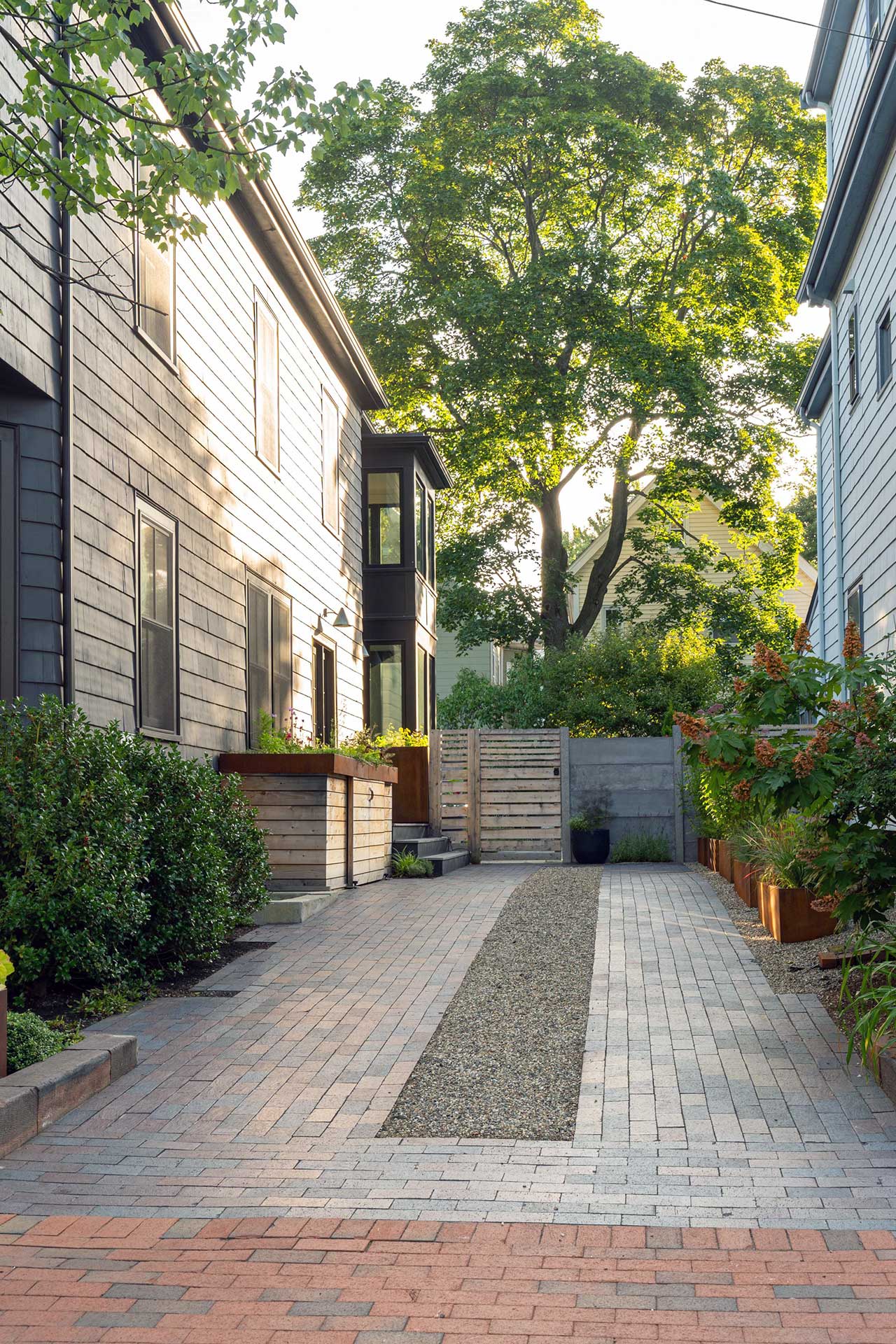
Many urban and close-suburban properties have limited access for equipment and materials. This can affect everything from hardscape installation to drainage work, soil amendment, irrigation, and plant delivery.
Professional planning helps anticipate these realities before construction begins. Material sizes, staging areas, labor needs, and sequencing all matter more when access is tight.
Drainage Near Foundations and Patios
Drainage problems are common in compact spaces because there is often less room to move water away from the house. Patios, walkways, retaining walls, planting beds, and neighboring grades can all influence where stormwater collects.
A good design should address grading, permeable surfaces where appropriate, downspout discharge, soil conditions, and planting bed elevation. Drainage solutions are not the most glamorous part of landscape design, but they are often what allow the finished space to perform well over time.
Related Blog: Why Professional Landscape Drainage Should Be Part of Every Boston Landscape Plan
Limited Planting Depth
Small yards often have narrow planting beds. That can make it difficult to create depth, softness, and seasonal interest. It also increases the risk of overplanting.
The best compact planting designs rely on structure first. A few well-chosen evergreen anchors, ornamental trees, shade-adapted perennials, groundcovers, and seasonal containers can often do more than a crowded mix of too many plant varieties.
Snow Storage and Winter Durability
Boston-area landscapes need to work through all four seasons. Snow storage, freeze-thaw cycles, salt exposure, and winter foot traffic can affect paving, steps, walls, planting, and irrigation.
Materials should be selected for durability, not just appearance. Natural stone, brick, high-quality pavers, metal edging, gravel joints, and properly built walls can perform beautifully when designed and installed with New England conditions in mind.
Related Blog: Best Stone and Hardscape Materials for Boston Landscapes
Competing Uses
A small outdoor space may need to serve many purposes. Dining, grilling, entertaining, gardening, pets, children, storage, circulation, and seasonal containers may all be part of the wish list.
This is where prioritization becomes essential. A compact yard cannot be everything at once, but it can be designed to support the most important uses beautifully.
How to Make a Small Yard Feel Larger
A compact space does not need to feel cramped. The right design moves can make it feel more open, layered, and comfortable.
Create Clear Outdoor Rooms
Even a small patio or courtyard benefits from spatial definition. A dining area, lounge area, garden path, or quiet seating corner should feel intentional. That does not always require walls or major structures. A change in paving pattern, a low planting edge, a built-in bench, or a subtle grade shift can help define use.
When a small backyard has no clear structure, it often feels smaller than it is. When each zone has a purpose, the same square footage can feel more generous.
Use Fewer, Better Materials
Too many materials can make a compact landscape feel busy. A refined small-space design often uses a restrained palette: one primary paving material, one accent material, a consistent planting rhythm, and details that relate to the architecture of the home.
For Boston-area properties, this might mean bluestone, granite, brick, gravel, fieldstone, or high-quality concrete pavers. The right choice depends on the home’s style, the setting, and how the space will be used.
Extend Interior Sightlines
A small outdoor space often feels larger when it visually connects to the interior of the home. Aligning a patio, garden axis, specimen tree, or focal point with a kitchen, family room, or French door can make the landscape feel like part of the living space.
This is especially effective for townhomes, South End gardens, Brookline patios, Cambridge courtyards, and Newton properties where the outdoor area is viewed frequently from inside.
Build Vertically
When horizontal space is limited, vertical design becomes more important. Trellises, climbing plants, espaliered trees, pergolas, tall planters, layered hedges, and wall-mounted lighting can add dimension without consuming too much floor area.
Vertical elements should be used carefully. The goal is to create enclosure and interest, not to make the space feel walled off.
Use Built-In Seating
Built-in seating can be one of the most effective compact patio design strategies. A stone seat wall, wood bench, or integrated dining edge can reduce the need for bulky furniture while giving the space a custom feel.
Built-in elements can also provide hidden storage, define a patio edge, or create a more polished transition between hardscape and planting.
Patios, Terraces, and Courtyards: Choosing the Right Hardscape
In compact landscape design, the hardscape often carries much of the structure. Patios and terraces, walkways, steps, and walls determine how the space functions day to day.
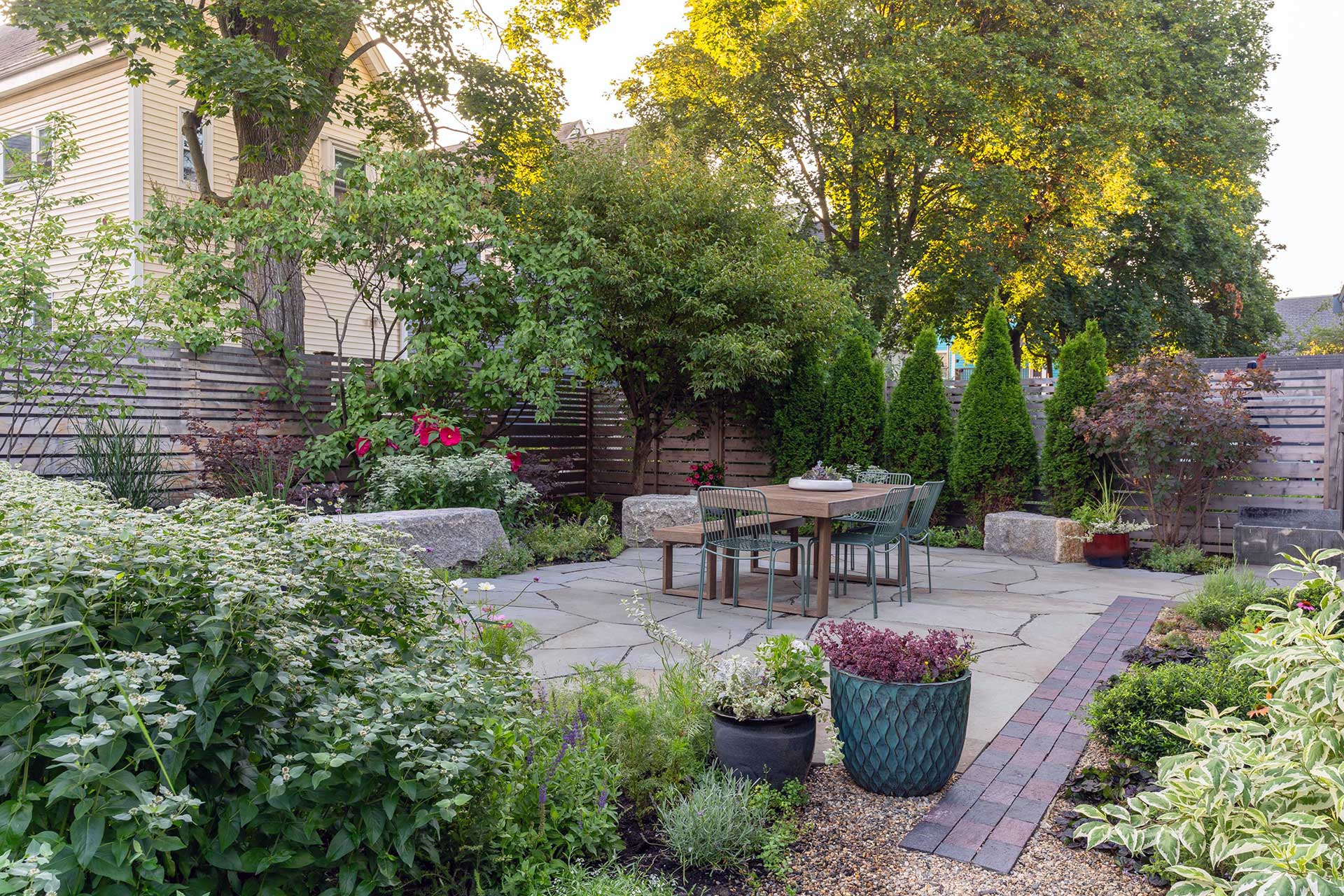

Patios Should Be Sized for Real Use
A common mistake is making a patio too small for the furniture and circulation it needs to support. Another is making it so large that the surrounding planting becomes an afterthought.
The best patio design balances use and proportion. A dining patio should allow room for chairs to move comfortably. A lounge area should account for furniture depth, side tables, circulation, and views. A grill or outdoor kitchen element should be placed where it functions well without dominating the space.
Paving Patterns Can Change the Feel of the Space
Paving layout matters. Large-format stone can make a space feel calmer and more contemporary. Brick can bring warmth and historic character. Gravel joints can soften the appearance of paving and support drainage when appropriate. A consistent pattern can make a compact space feel more expansive.
The paving should relate to the architecture of the home. A Beacon Hill courtyard, a Brookline Colonial, and a modern Newton renovation may each call for a different hardscape language.
Steps and Walls Should Feel Integrated
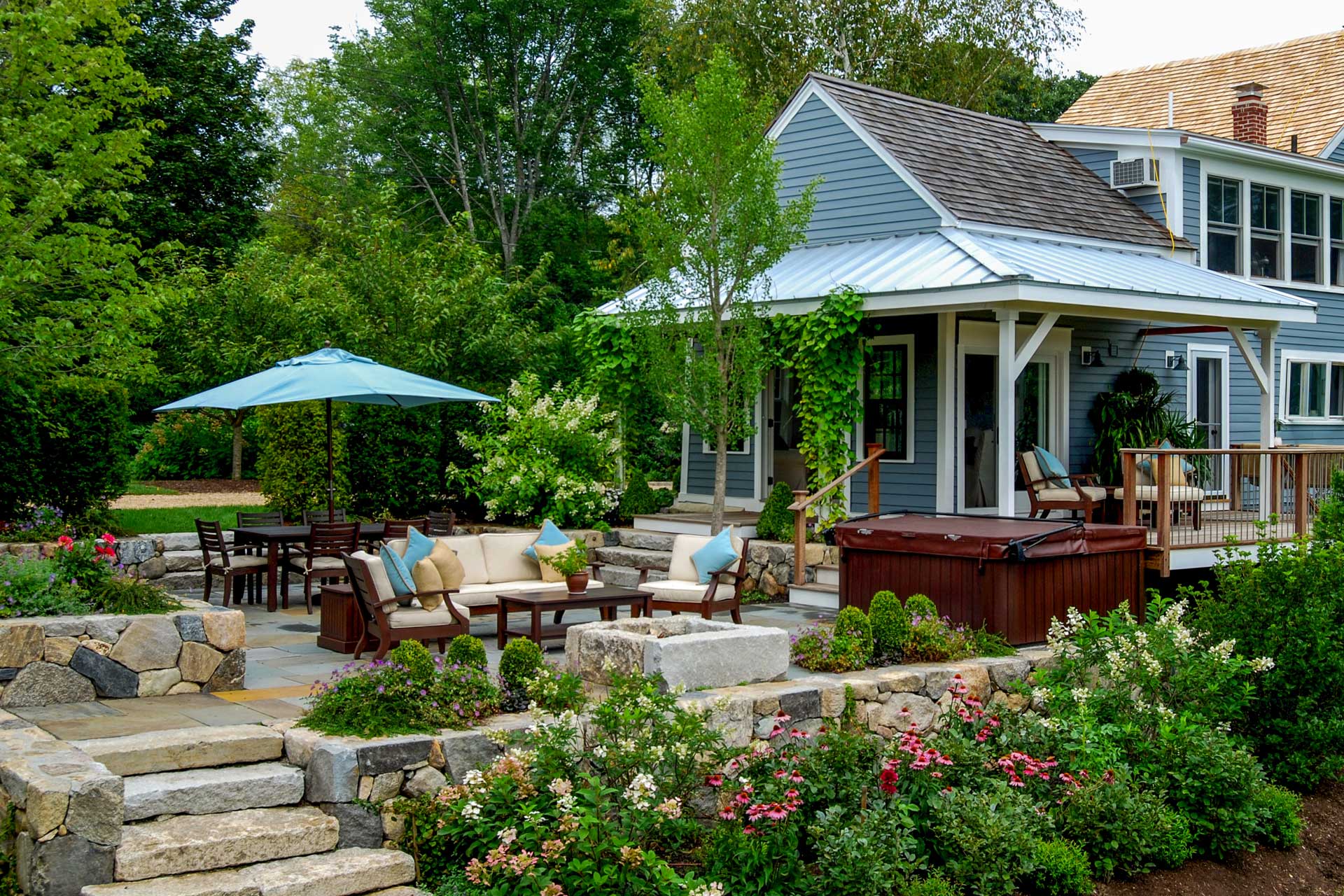
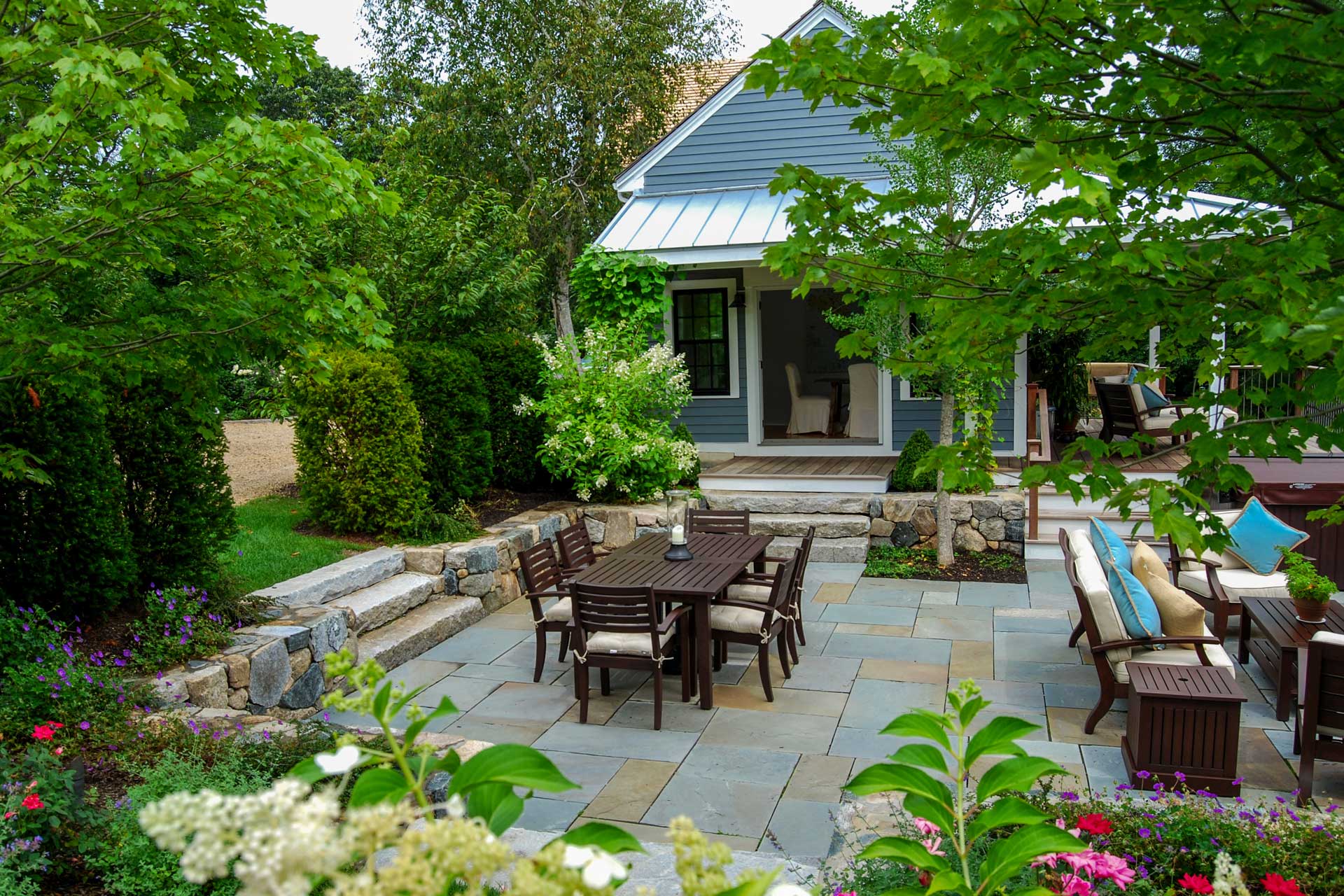
In small yards, grade changes can be challenging, but they can also create design opportunities. Steps, low walls, and raised planting beds can add structure and depth.
The key is integration. A retaining wall should not feel like a leftover engineering solution. It should relate to seating, planting, circulation, or the overall design composition.
Planting Design for Compact Boston Properties
Planting is what brings softness, privacy, seasonality, and character to a small outdoor space. It can also become overwhelming if not handled with restraint.
Start with Structure
A compact garden needs a strong backbone. Evergreen shrubs, small ornamental trees, clipped forms, hedging, or architectural grasses can provide year-round structure.
Good structural plants for Boston-area compact landscapes may include boxwood, yew, holly, dwarf conifers, hydrangea, serviceberry, dogwood, rhododendron, inkberry, ornamental grasses, and shade-tolerant groundcovers, depending on the site conditions.
Add Seasonal Interest Carefully
Small spaces benefit from seasonal change, but not from visual clutter. A thoughtful planting design may use spring bulbs, summer perennials, fall foliage, winter stems, and containers to create interest throughout the year.
The goal is rhythm, not collection. Repeating fewer plant varieties often feels more refined than using many different plants in small quantities.
Use Containers Strategically
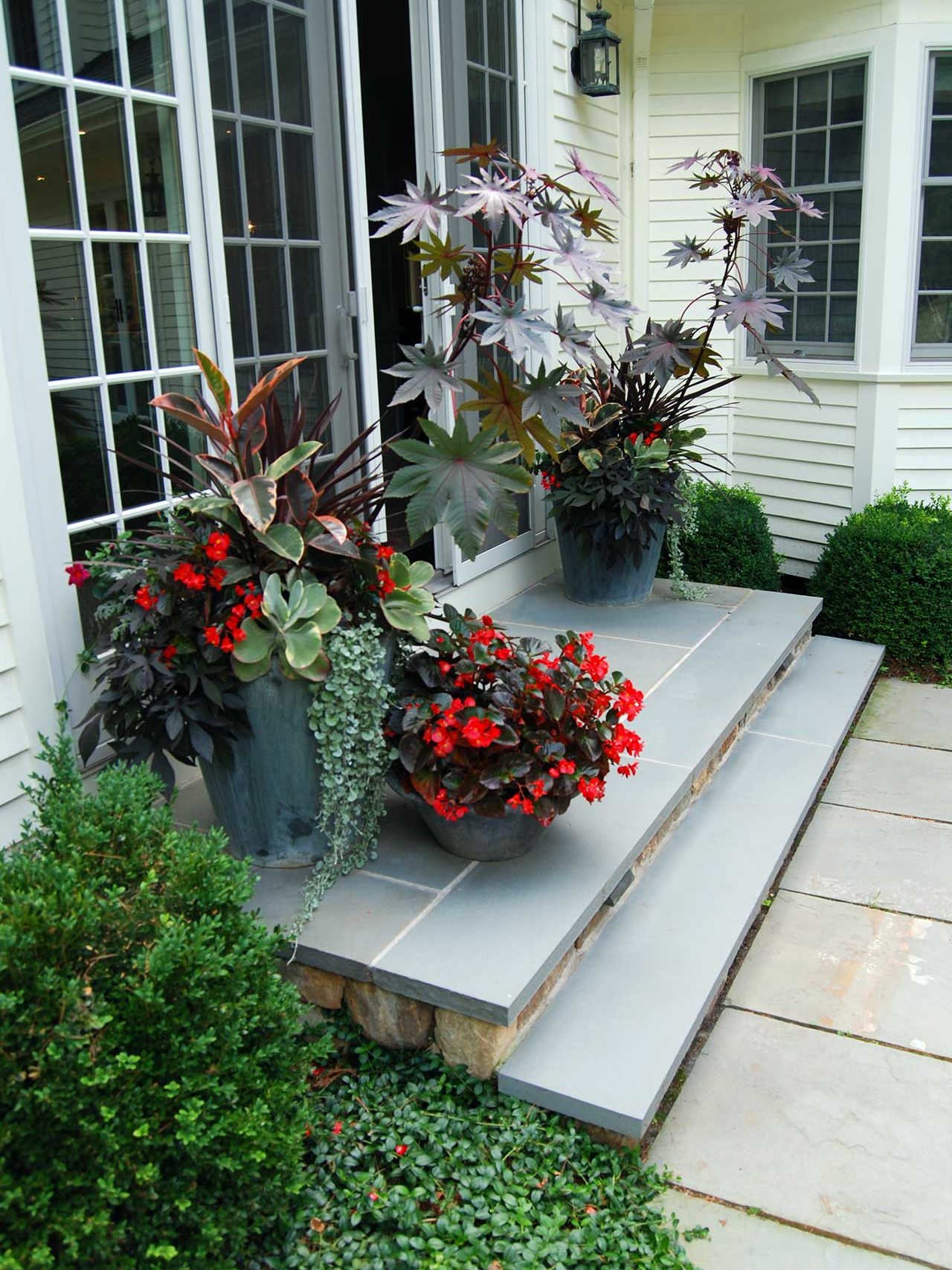
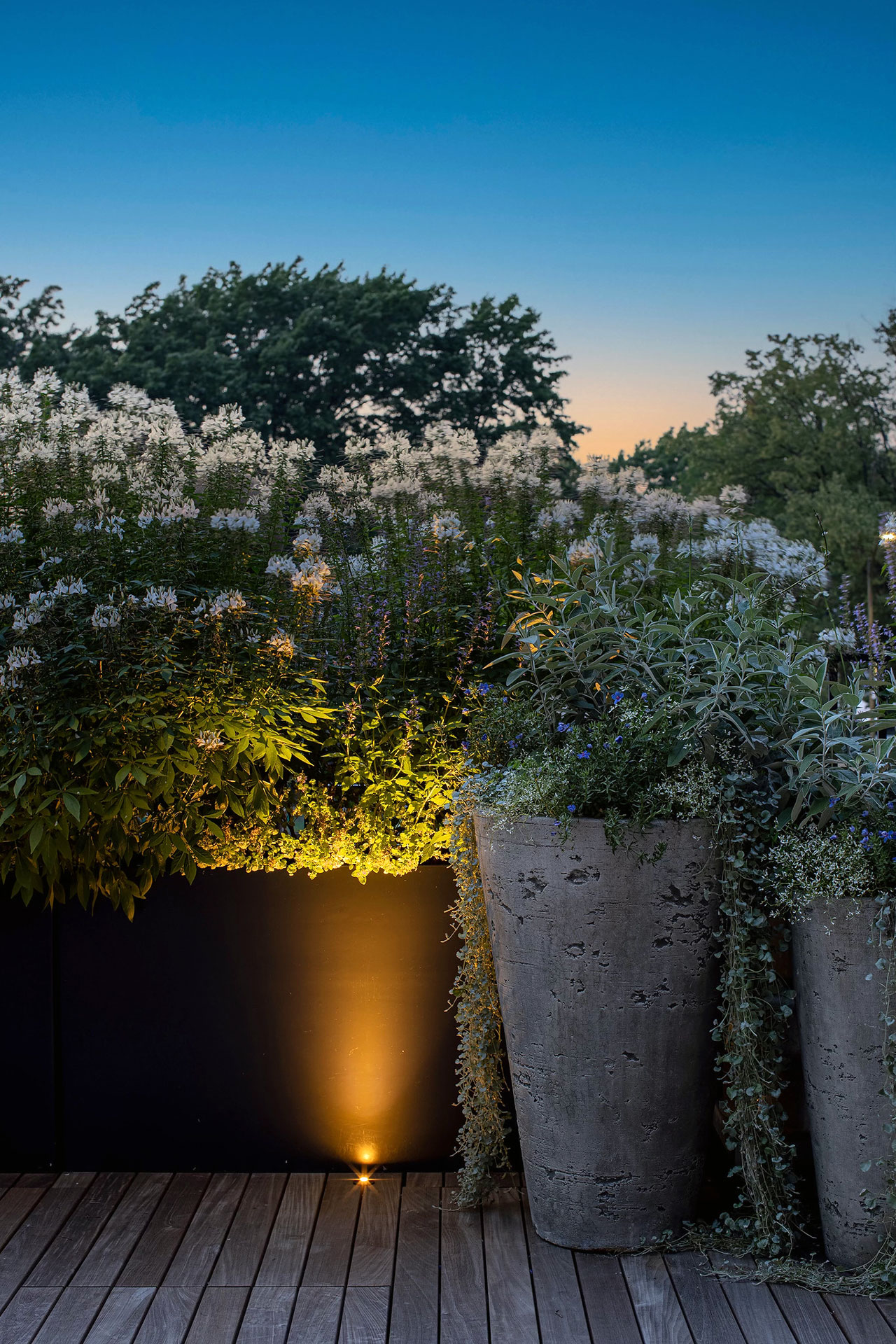
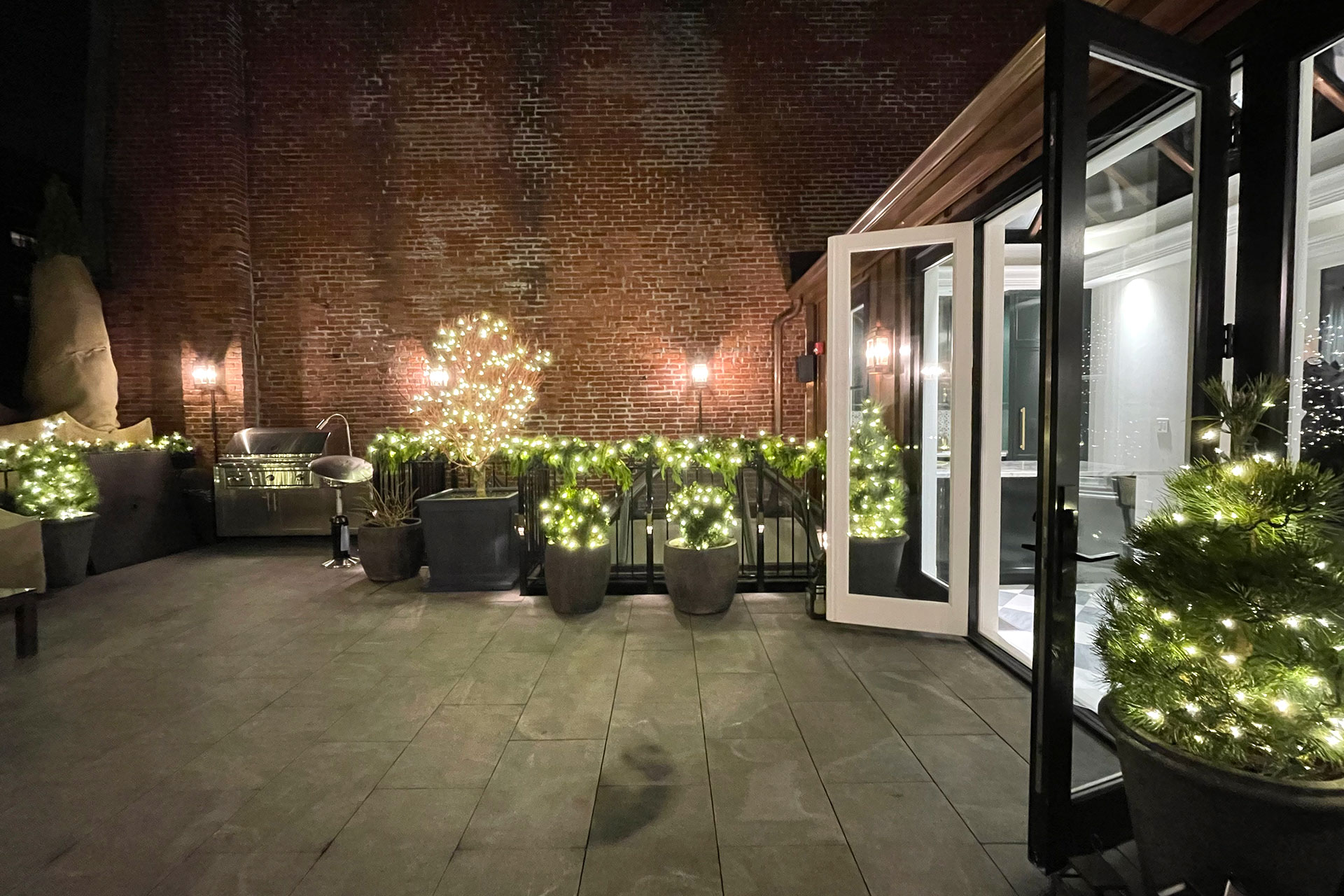
Seasonal containers can be especially useful in compact outdoor spaces. They add color, height, and flexibility without requiring permanent planting beds. Containers can frame an entry, soften a patio, define a seating area, or bring seasonal interest to a shaded courtyard.
For homeowners who want a polished look without constant replanting, professional seasonal planting can be a smart addition to the maintenance plan.
Avoid Overplanting
Overplanting is one of the easiest ways to make a small landscape feel crowded. Plants need room to mature. A design that looks slightly restrained at installation often ages better than one that is packed too tightly from the beginning.
A professional planting plan accounts for mature size, pruning needs, light conditions, soil, irrigation, and long-term residential landscape maintenance.
Privacy Without Closing In the Space
Privacy is not only about blocking views. It is about creating comfort. In compact Boston-area properties, the best privacy strategies often combine enclosure, softness, and selective screening.
Layered Planting
Layered planting can create privacy while preserving depth. A small ornamental tree might screen an upper window. Evergreen shrubs can provide year-round structure. Perennials and groundcovers can soften the lower level.
This approach feels more natural than relying only on a tall fence or hedge.
Fences and Trellises
Fences are useful, but they should be designed as part of the landscape. Material, height, color, spacing, and planting all influence whether a fence feels elegant or harsh.
Trellises can add vertical interest and support climbing plants without requiring deep planting beds.
Pergolas and Overhead Structure
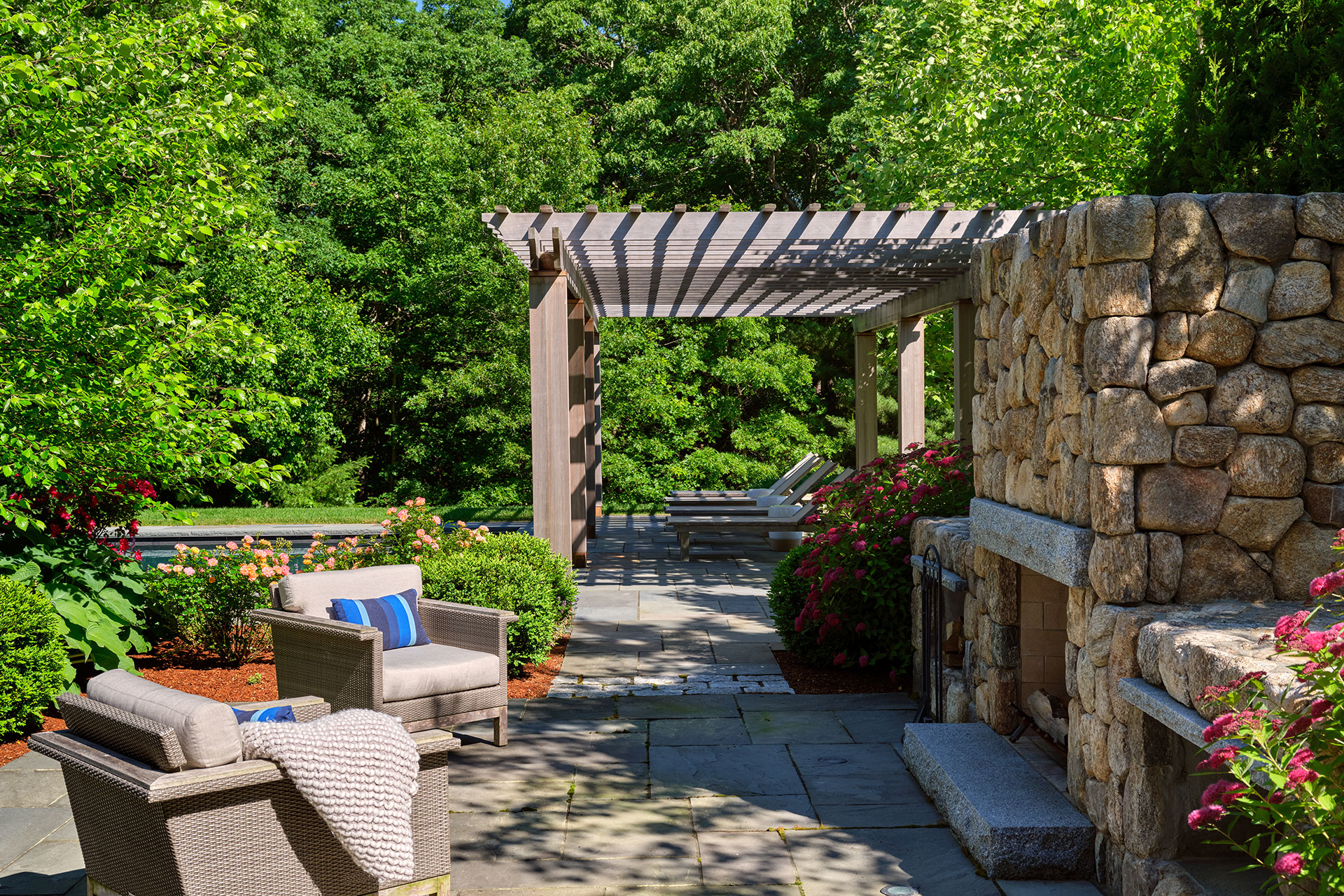
A pergola can help define an outdoor dining or seating area while creating a greater sense of privacy. In small spaces, the proportions need to be carefully managed. A pergola that is too heavy can overwhelm the space. One that is well scaled can make the patio feel like an outdoor room.
Lighting for Evening Privacy
Landscape lighting can make a compact garden feel more private at night. Softly lit planting, steps, walls, and focal points draw the eye into the garden and reduce the feeling of being exposed.
The National Association of Realtors’ outdoor features report found that landscape lighting is among the outdoor improvements that homeowners rate very highly for satisfaction. In compact spaces, that impact can be especially noticeable because lighting changes the entire atmosphere of the garden after dark.
Related Blog: Landscape Lighting Ideas to Highlight Your Boston Property’s Best Features
Drainage, Irrigation, and Maintenance Matter More in Small Spaces
The most successful compact landscapes are not only beautiful on installation day. They are designed to perform over time.
Drainage Should Be Planned Early
Drainage cannot be treated as an afterthought. In tight spaces, poor drainage can damage paving, weaken planting, stain walls, create damp areas, and contribute to foundation concerns.
Designers should look at existing grades, soil conditions, downspouts, neighboring runoff, paved surfaces, and planting beds before finalizing the layout. The American Society of Landscape Architects notes that residential landscapes can be designed to help manage stormwater, reduce runoff, conserve water, and support healthier outdoor environments.
Irrigation Helps Protect the Investment
Compact spaces often include containers, raised beds, narrow planting areas, and high-value plant material. These areas can dry out quickly, especially near masonry, pavement, fences, or reflected heat.
A well-designed irrigation system can support plant health while reducing guesswork. Drip irrigation, smart controllers, and careful zoning are especially useful when planting conditions vary within a small area.
Related Blog: Why Proper Watering Is Essential After a New Landscape Installation
Maintenance Is More Visible
In a large landscape, a few overgrown shrubs or tired containers may not dominate the view. In a compact courtyard or patio garden, they often do.
Pruning, edging, seasonal color, irrigation checks, lighting adjustments, leaf cleanup, and soil care all help maintain the design intent. For compact high-value properties, ongoing landscape maintenance is not just upkeep. It is part of preserving the finished design.
“Small gardens reveal everything. When the maintenance plan supports the design, the space continues to feel intentional season after season.”
– Nicole DiGiacomo, Account Manager, a Blade of Grass
When a Compact Space Needs a Professional Plan
Some small improvements can be handled individually. A few containers, minor planting refreshes, or furniture updates may not require a comprehensive design process. But many compact Boston-area landscapes benefit from a professional plan before work begins.
A professional design approach is especially valuable when the project includes:
- new or expanded patios and terraces
- privacy screening
- significant planting changes
- drainage or grading concerns
- outdoor lighting
- irrigation
- walls, steps, or built-in seating
- coordination with architecture or renovation work
- long-term property maintenance planning
The value of the plan is not only aesthetic. It helps prevent disconnected decisions. A patio can be sized with planting in mind. Lighting can be coordinated with circulation. Drainage can be addressed before stone is installed. Maintenance expectations can shape plant choices from the beginning.
For homeowners considering a larger transformation, Blade’s landscape design services, landscape construction services, and landscape transformations offer helpful next steps.
Related Reading
- The Most Popular Landscape Design Projects for Boston-Area Homes
- How Much Does Landscape Design Cost in Boston?
- Best Stone and Hardscape Materials for Boston Landscapes
- Why Professional Landscape Drainage Should Be Part of Every Boston Landscape Plan
- Why Proper Watering Is Essential After a New Landscape Installation
- What Should a Landscape Warranty Cover? A Boston Homeowner’s Guide
- Pet-Friendly Landscaping Ideas for Beautiful, Durable Boston-Area Yards
Frequently Asked Questions About Small Outdoor Space Design
Q: What is the best way to make a small backyard feel larger?
A: The best way to make a small backyard feel larger is to create a clear layout, use a restrained material palette, preserve sightlines, and layer planting carefully. Built-in seating, consistent paving, vertical elements, and subtle lighting can also help a compact yard feel more open and useful.
Q: Is a patio a good investment for a small Boston-area yard?
A: Yes, a well-designed patio can be one of the most valuable improvements for a compact yard. It creates a defined outdoor living area and can support dining, entertaining, grilling, or quiet relaxation. The key is sizing the patio properly so it works with planting, circulation, drainage, and the architecture of the home.
Q: What plants work well in compact urban gardens?
A: The right plants depend on light, soil, exposure, and maintenance goals. Many compact Boston-area gardens benefit from a mix of evergreen structure, small ornamental trees, shade-tolerant perennials, groundcovers, hydrangeas, boxwood, yew, holly, ornamental grasses, and seasonal containers. A professional planting plan helps avoid overcrowding and supports long-term health.
Q: How can I add privacy to a small yard without making it feel closed in?
A: Privacy is often best achieved through layers. Fencing, trellises, ornamental trees, shrubs, pergolas, and lighting can work together to screen views while preserving depth and openness. A single tall hedge or solid fence may solve one problem but create another if it makes the space feel too enclosed.
Q: Do small landscapes need irrigation and maintenance?
A: Often, yes. Compact landscapes can be more sensitive to heat, reflected light, shallow planting beds, containers, and uneven moisture. Irrigation helps protect plantings, while ongoing maintenance keeps the design looking intentional. In small spaces, pruning, seasonal care, lighting adjustments, and irrigation checks are especially visible.
Designing a Compact Outdoor Space With a Blade of Grass
A small outdoor space should not feel like a compromise. With the right design, a compact Boston yard, courtyard, patio, or terrace can become one of the most memorable parts of the property.
The strongest results come from planning the space as a whole. Hardscape, planting, privacy, drainage, lighting, irrigation, and maintenance should support one another from the beginning. That integrated approach helps the landscape feel more refined, function more comfortably, and mature with intention.
a Blade of Grass works with homeowners throughout Greater Boston to design, build, and care for distinctive residential landscapes, including compact yards, urban courtyards, patios, terraces, and small outdoor rooms. If you are considering how to make a smaller outdoor space more beautiful, private, and functional, contact us to start a conversation.